
最近,千亿姐突然迷上了看杂志。
重新回到一种“慢阅读”的感觉真好。只是问题也很现实——实体杂志太占地方,尤其出差、通勤的时候,几本杂志塞进包里,体验并不轻松。于是,电子阅读器重新回到了千亿姐视野,从科大讯飞、掌阅一路看到文石BOOX,最终因为彩色墨水屏而选择了文石。
一个巴掌大的阅读器,动辄上千块,销量却过万。

也是从这一刻开始,千亿姐突然意识到,一个曾经被认为已经“小众到快消失”的市场,好像又重新热闹起来了。
PART 01
从阅读器到“墨水屏平板”,文石为什么活了下来
当年Kindle退出国内市场的时候,大家以为电子阅读器行业也差不多走到头了。
毕竟,在相当长一段时间里,Kindle几乎等于“电纸书”。这个产品曾经像iPod之于MP3、iPhone之于智能手机一样,完成了一个品类的用户教育。它定义了人们对于电子阅读的最初认知,也让“墨水屏”第一次进入大众消费市场。
但有意思的是,Kindle离场之后,国内电子纸行业并没有一起衰退。
相反,这几年越来越多厂商开始做墨水屏平板、办公本、读写本,彩墨屏、AI笔记,并频繁出现在消费电子发布会上。
而在这轮变化里,最绕不开的一家公司,就是文石BOOX。
今年年初,广州文石正式向港交所递交招股书。这家成立于2008年的公司,终于在2026年站到了资本市场门口。
从行业地位来看,它可能是中国墨水屏行业里极具代表性的企业之一。它经历过Kindle最强势的年代,也熬过行业最冷的时候。即使没有成为大众消费电子巨头,却在一个极其细分的小市场里,建立起了相对完整的产品体系。

只是,当一家长期依靠“小而深”逻辑成长起来的公司真正开始IPO时,市场讨论的重点往往会发生变化。过去大家关心的是文石的产品为什么好用,现在资本市场更在意的,则是另一个问题:这样一家做墨水屏设备的公司,究竟还能维持多久的增长?
把时间拨回到2008年。
2007年,苹果发布第一代iPhone;同年,亚马逊推出第一代Kindle。几乎是在全球移动互联网刚刚起步的时候,次年文石就在广州成立,开始做电子墨水屏设备。那个阶段,大多数人对于电子纸产品的理解还停留在“电子书阅读器”,而Kindle几乎定义了整个行业。
后来的事实却证明了另一个结论,Kindle模式在国内不成立。不少人从上帝视角复盘Kindle的这场失败,多数把原因归结为“水土不服”。
电子书的逻辑,在欧美市场是成立的,因为欧美用户长期习惯为正版数字内容付费,亚马逊可以通过”硬件低利润叠加内容订阅”持续赚钱。
可中国市场不是这样。国内用户对电子阅读的需求,天然就和移动互联网深度绑定。
中国用户不会只满足于“看书”,尤其是在官方平台付费购买的“电子书”。
他们需要微信读书、知乎、网页、PDF、网文、公众号、办公文档,甚至还希望能同步笔记、导入资料、开分屏做文献整理。换句话说,中国用户真正想要的,从来不是一个封闭阅读器,而是一个“护眼的移动终端”。
Kindle没能理解这一点,文石似乎却意识到了。

2013年前后,当Kindle还在坚持封闭生态时,文石已经开始把安卓系统搬到墨水屏设备上。这个动作当时看起来很激进,因为开放系统意味着复杂度会急剧上升,需要适配第三方APP,要解决刷新率问题,要解决残影问题,还要兼顾功耗和平衡体验。
但回头看,这一步几乎决定了后来整个国产墨水屏行业的发展方向。
因为从那一刻开始,文石做的就已经不再只是“阅读器”,而是“墨水屏平板”。
这两个概念看似接近,商业逻辑却完全不同。
阅读器本质上是单一功能硬件,用户需求稳定,但市场空间有限;平板则意味着生产力场景,它可以不断延伸边界。
所以后来用户会发现,文石产品越来越不像传统电纸书。它开始强调办公、笔记、写作、文献管理、多任务处理,甚至连宣传语言都逐渐从“阅读体验”转向“知识生产力工具”。
这个变化,其实特别像智能手机行业早年的转型。
诺基亚时代,手机核心是“通讯”;iPhone之后,手机核心变成“移动计算平台”。
文石本质上也在做类似的事情,把墨水屏从“阅读工具”变成“低功耗生产力终端”。
而且它切中的,还是一群非常特殊的人。
律师、科研工作者、教师、医生、金融分析师、长期文字工作者……这些用户共同特点是阅读量极大,眼睛极度疲劳,同时又高度依赖文档整理和笔记系统。
这类人群规模不算大,但需求非常深。
很多消费电子公司喜欢做大众市场,因为用户多,但其实真正有产品壁垒的,往往是这种专业需求的市场。因为大众需求容易复制,专业需求却需要长期理解。
这也解释了为什么千亿姐用了几年iPad,最后还是会买文石?
因为LCD和OLED再好,也无法解决长时间阅读带来的视觉疲劳。而墨水屏哪怕刷新率不够完美,它依然更接近纸张。
况且它还是彩色的墨水屏。
PART 02
行业有点“卷不动了”
不过,理解文石的竞争力之后,会发现另一个更现实的问题:这家公司最大的不确定性,其实并不来自产品,而来自行业本身。
根据洛图科技线上监测数据显示,2024年一季度,电子纸阅读器的线上监测销量为12.2万台,文石Leaf3占据了阅读器线上整体销量的22.1%。电子墨水屏市场这些年看起来很热闹,但本质上它始终是一个“小而美”的市场。
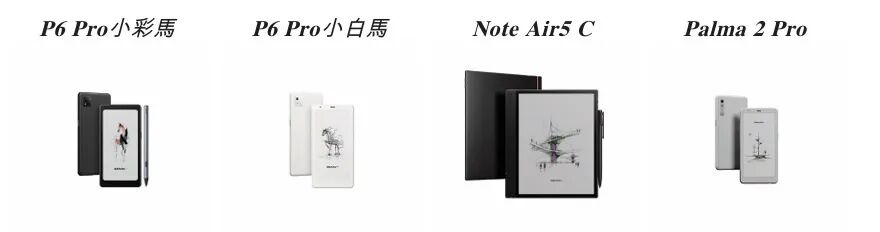
这是很多投资人现在最纠结的地方。因为消费电子行业有一个残酷规律,只要市场空间不够大,企业最终都会陷入内卷。
电子墨水屏市场这几年确实还在增长。Kindle退出之后,国产品牌迅速填补市场空缺,整个行业进入一轮扩张周期。
根据洛图科技数据,2024年中国电子纸平板销量达到183.4万台,同比增长接近50%。从表面上看,这似乎仍然是一个高增长行业。
但问题在于,蛋糕本身就不大。
即便整个行业维持增长,它距离真正主流消费电子的规模仍然差距巨大。智能手机一年出货十几亿台,而电子纸设备全球市场依然只是百万级别。毕竟这个行业最大的特点,就是用户需求足够稳定,但用户规模始终有限。
这个背景之下,行业发展到一定阶段后,很容易进入内卷。而文石现在已经开始面临这种压力。
为什么文石这些年疯狂推新品?
因为它必须推。
从招股书来看,仅2023年和2024年,文石就分别推出了14款和13款新品。但阅读器、办公本、彩墨平板、不同尺寸、不同定位的产品持续迭代,背后对应的是越来越高的研发和供应链成本。
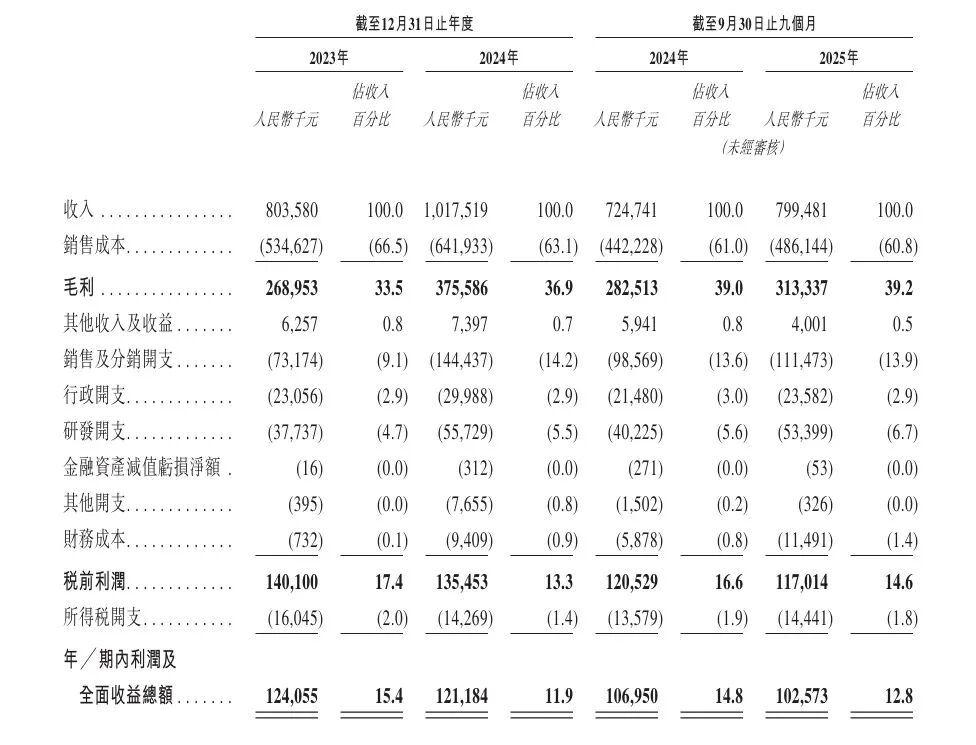
但问题在于,电子墨水屏并不像手机。手机用户一两年一换,阅读器用户的换机周期可能长达四五年。
换句话说,行业新增用户始终是有限的。
于是,厂商只能不断从阅读往外扩场景:办公、学习、AI笔记、生产力、彩墨屏……毕竟,如果只讲阅读,整个市场很快就会见顶。
但场景扩张也带来了另一个问题,就是产品越来越贵。
早期Kindle最成功的时候,大量产品价格只有几百元,因为它本质上是一个大众阅读设备。而现在主流墨水屏办公本的价格普遍已经来到一两千元,部分高端产品甚至接近4000元。
价格上涨当然有技术原因。彩墨屏、快刷、自研芯片、手写系统、多任务,这些东西都需要研发投入。而一个年销量只有百万级的行业,根本不可能像手机那样靠规模摊薄成本。
所以行业最终走向了一个很微妙的方向——越来越专业,也越来越小众。
这其实是文石现在最大的矛盾。
尤其在今天,平板、手机、AI工具已经高度普及的背景下,很多用户会突然意识到一个问题:我真的需要一台3000块的阅读器吗?
很多用户买回来之后,最终最常用的功能,依然只是看PDF。就像千亿姐,至今还没使用过阅读器除看书之外的其他功能。
这也说明了为什么二手Kindle到今天依然存在一定的稳定市场。因为对于大量普通用户来说,他们真正需要的,只是一个简单、便宜、护眼的阅读工具,而不是一台越来越复杂的“生产力设备”,况且这个“生产力设备”不如手机平板好用。
从行业趋势来看,市场增长放缓其实已经开始显现。
文石招股书显示,国内阅读器市场2020年至2024年复合增长率为28.4%,但2025年至2030年预计下降至15.6%。
看起来还是增长,但资本市场怕的从来不是增长慢,而是增速持续下降。
一旦行业进入成熟阶段,消费电子公司最容易发生的事情,就是研发越来越贵,营销越来越贵,但利润不增反减。
文石似乎现在已经有一点这种味道了。
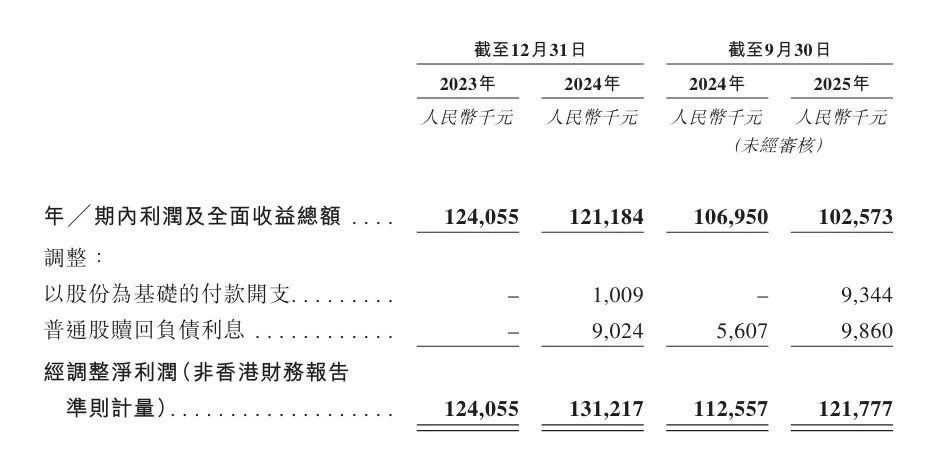
更麻烦的是,文石并没有真正建立类似苹果那样的生态闭环,它只是一家硬件+软件适配的公司。
其中的硬件领域一旦失去高速增长,估值逻辑就会迅速变化。
PART 03
IPO背后的隐忧
如果说行业放缓还只是长期问题,那么文石IPO前的一系列资本动作,则让市场情绪变得更复杂。
因为太着急了。
文石过去的发展,很大程度上离不开融捷集团。
2016年,吕向阳控制的融捷集团进入文石,通过收购和增资取得公司控股权。此后几年,文石进入扩张阶段,产品线快速增加,公司整体规模也明显提升。从某种意义上说,融捷不仅给了文石资金,更重要的是提供了产业资源与信用背书。
但自2024年1月起,融捷开始逐步减持退出。
资本退出本身并不奇怪。根据公开信息,融捷退出原因主要为自身资金管理需求,文石公司表示该变动不影响公司正常经营。至于为何选择在IPO前的这一时间点退出,融捷方面未作进一步说明。
更关键的是,为了完成减资和股权调整,文石财务结构也开始明显承压。2024年末,公司资产负债率提升至86.6%,净资产规模则明显缩水。与此同时,公司近几年还进行了多轮高比例派息。

一家还在强调研发、强调成长性的科技公司,为什么要在IPO前持续高比例分红?
尤其是在行业竞争越来越激烈的时候,这种对利润的处理方式,是否有利于公司的长期发展?
LAST
文石当然不是一家差公司。
过去很多年,中国硬件行业特别喜欢讲“大市场”的故事。
新能源、手机、AI、机器人,几乎所有热门赛道都在追求规模扩张。但文石代表的是另一种公司,不够大,却足够深,没有全民用户,却拥有极强的专业用户黏性。
它甚至算得上少见的长期主义企业,十几年专注一个小众领域,持续研发、持续迭代,本身已经非常不容易。
这也是它特别的地方。它证明了中国公司不仅能做流量生意,也能在一个极窄的技术领域里,慢慢熬出壁垒。
但在中国消费电子行业里,资本市场看的并不只是产品好不好,它更关心的是你的故事还能讲多久?
资本市场并不会因为“小而美”就天然给高估值。
隐形冠军最大的难题,往往不是活下来,而是长大之后,如何继续增长。前三季度的增收不增利似乎不是一个好的信号。
从1月16日递表港交所主板,到现在5月中旬仍在审核中,大概率要重新提交招股书来更新最新财务数据及业务状况,上市的进展,我们会持续关注。对于今天的文石来说,它真正的考题或许才刚刚开始。
Recently, a woman known online as "Qianyi Jie" has taken up magazine reading.
It feels great to return to a "slow reading" pace. But the problem is also very real—physical magazines take up too much space, especially when traveling or commuting. Stuffing a few magazines into a bag isn't easy. So an e-reader came back into Qianyi Jie's view. She looked at iFlytek and iReader and finally chose BOOX because of its color e-ink display.
A palm-sized e-reader costs thousands of yuan, yet sells over ten thousand units.
From that moment on, Qianyi Jie suddenly realized that a market once thought to be "niche enough to disappear" seemed to be getting lively again.
PART 01
From an e-reader to an "e-ink tablet": why BOOX survived
When Kindle exited the Chinese market, many thought the e-reader industry was more or less done.
After all, for a long time, Kindle almost equaled the word "e-paper." This product once completed user education for an entire category, much like iPod did for MP3 players and iPhone did for smartphones. It defined people's earliest understanding of digital reading and brought "e-ink" into the mass consumer market for the first time.
But what's interesting is that after Kindle left, China's e-paper industry did not decline along with it.
On the contrary, in recent years more and more manufacturers have begun making e-ink tablets, office notebooks, and writing tablets. Color e-ink screens and AI notes have appeared frequently at consumer electronics launches.
Among the changes in this round, one company stands out—BOOX.
Earlier this year, Guangzhou BOOX officially filed its prospectus with the Hong Kong Stock Exchange. Founded in 2008, the company finally reached the doorstep of the capital market in 2026.
From an industry standpoint, it may be one of the most representative companies in China's e-ink sector. It lived through Kindle's most dominant era and survived the industry's coldest period. Even though it didn't become a mass consumer electronics giant, it built a relatively complete product system in an extremely niche market.
But when a company that has grown for years on a "small yet deep" logic begins its IPO, the focus of market discussion tends to shift. In the past, people cared about why BOOX products worked well. Now the capital market is more interested in another question: how long can a company making e-ink devices really sustain its growth?
Let's turn the clock back to 2008.
In 2007, Apple released the first iPhone; the same year, Amazon launched the first Kindle. Almost at the dawn of global mobile Internet, BOOX was founded in Guangzhou the following year to make electronic e-ink devices. At that stage, most people still understood e-paper products as "e-book readers," and Kindle almost defined the entire industry.
But later facts proved another conclusion: the Kindle model didn't work in China. Many have retrospectively analyzed Kindle's failure from a God's-eye view, and most attributed the reason to "a lack of local adaptation."
The e-book logic works in Western markets, because Western users have long been accustomed to paying for legitimate digital content. Amazon could keep earning money through "low-margin hardware plus content subscriptions."
But China's market was not like that. Chinese users' demand for digital reading has always been deeply tied to mobile Internet.
Chinese users would not be satisfied with just "reading books," especially officially paid "e-books."
They needed WeChat Read, Zhihu, web pages, PDFs, web novels, official accounts, and office documents. They even wanted to sync notes, import materials, and use split-screen for literature management. In other words, what Chinese users truly wanted was never a closed e-reader, but rather an "eye-friendly mobile terminal."
Kindle failed to understand this point. BOOX seemed to have realized it.
Around 2013, while Kindle was still insisting on a closed ecosystem, BOOX began porting the Android system onto e-ink devices. This move looked radical at the time, because an open system meant complexity would rise sharply—third-party apps needed adaptation, refresh-rate issues had to be solved, ghosting problems had to be addressed, and power consumption had to be balanced against user experience.
But looking back, this step almost determined the development direction of the entire domestic e-ink industry later on.
Because from that moment on, what BOOX made was no longer just an "e-reader," but an "e-ink tablet."
These two concepts seem similar, but their business logic is entirely different.
An e-reader is essentially single-function hardware. User demand is stable, but the market space is limited. A tablet, on the other hand, means productivity scenarios—it can constantly expand its boundaries.
So later users found that BOOX products were becoming less and less like traditional e-papers. It began emphasizing office work, note-taking, writing, literature management, and multitasking. Even its marketing language gradually shifted from "reading experience" to "knowledge productivity tool."
This change is actually very similar to the early transformation in the smartphone industry.
In the Nokia era, a phone's core function was "communication." After iPhone, the core became a "mobile computing platform."
BOOX was essentially doing something similar—turning e-ink from a "reading tool" into a "low-power productivity terminal."
Moreover, it targeted a very special group of people.
Lawyers, researchers, teachers, doctors, financial analysts, and long-term writers… these users share in common the fact that they read heavily, suffer extreme eye fatigue, and depend highly on document management and note systems.
The number of such people is not large, but their needs run very deep.
Many consumer electronics companies prefer to target the mass market because there are more users. But in reality, true product barriers are often built in professional-demand markets. Because mass demand is easy to copy, while professional demand requires long-term understanding.
This also explains why Qianyi Jie used an iPad for several years but still ended up buying a BOOX.
Because no matter how good LCD or OLED screens are, they cannot solve the visual fatigue caused by prolonged reading. And e-ink, even if its refresh rate is not perfect, remains closer to paper.
Besides, it is now a color e-ink screen.
PART 02
The industry is beginning to "struggle to keep up"
However, after understanding BOOX's competitiveness, another more realistic problem appears: the biggest uncertainty for this company actually comes not from products, but from the industry itself.
According to online monitoring data from洛通Tech (Runto Technology), in the first quarter of 2024, the online sales of e-paper readers were 122,000 units, with the BOOX Leaf3 accounting for 22.1 percent of total online reader sales. Although the e-ink screen market has looked busy in recent years, it remains essentially a "small yet beautiful" market.
This is where many investors find themselves most conflicted today. Because there is a cruel law in the consumer electronics industry: as long as the market space is not large enough, companies will eventually fall into vicious competition.
The e-ink screen market has indeed continued to grow in recent years. After Kindle exited, domestic brands quickly filled the market gap, and the entire industry entered an expansion cycle.
According to Runto Technology data, China's e-paper tablet sales reached 1.834 million units in 2024, up nearly 50 percent year on year. On the surface, this still seems like a high-growth industry.
But the problem is that the cake itself is not big.
Even if the entire industry maintains growth, it still falls far short of the scale of truly mainstream consumer electronics. Smartphone shipments reach over a billion units per year, while the global e-paper device market is still only in the low millions. After all, the biggest characteristic of this industry is that user demand is stable enough, but the user base remains limited.
Against this background, once the industry develops to a certain stage, it easily falls into vicious competition. And BOOX has already begun to face this pressure.
Why has BOOX been so eager to launch new products these years?
Because it must.
According to the prospectus, BOOX launched 14 new products in 2023 alone and 13 in 2024. But the continuous iteration of e-readers, office notebooks, color e-ink tablets in different sizes and different positioning corresponds to increasingly higher R&D and supply-chain costs.
But the problem is that e-ink screens are not like smartphones. Smartphone users replace their devices every one or two years, but e-reader users may go four or five years before upgrading.
In other words, new users in the industry are always limited.
Therefore, manufacturers can only constantly expand outward from reading scenarios: office work, learning, AI notes, productivity, color e-ink… After all, if they only talk about reading, the entire market will soon hit a ceiling.
But expanding scenarios brings another problem: products are becoming more and more expensive.
When Kindle was most successful in its early days, many products sold for only a few hundred yuan, because it was essentially a mass-market reading device. But now the price of mainstream e-ink office notebooks has generally reached one to two thousand yuan, with some high-end products nearing 4,000 yuan.
Of course, the price increase has technical reasons. Color e-ink, fast refresh, self-developed chips, handwriting systems, and multitasking all require R&D investment. And an industry with annual sales of only millions simply cannot spread costs through scale the way smartphones do.
So the industry has ultimately moved in a very subtle direction—becoming more and more professional, and at the same time more and more niche.
This is actually BOOX's biggest contradiction today.
Especially now, when tablets, smartphones, and AI tools have become highly popular, many users suddenly realize a problem: do I really need a 3,000-yuan e-reader?
After many users buy one, the function they end up using most is still just reading PDFs. Like Qianyi Jie, who still hasn't used any of the e-reader's non-reading functions.
This also explains why second-hand Kindles still maintain a stable market today. Because for a large number of ordinary users, what they truly need is simply a straightforward, inexpensive, eye-friendly reading tool—not an increasingly complex "productivity device," especially since that "productivity device" is not as easy to use as a smartphone or tablet.
From an industry trend perspective, the slowdown in market growth has already begun to show.
BOOX's prospectus shows that the domestic reader market grew at a compound annual rate of 28.4 percent from 2020 to 2024, but is expected to drop to 15.6 percent from 2025 to 2030.
It still looks like growth, but what the capital market fears is never slow growth—it fears continuously declining growth rates.
Once the industry enters a mature stage, the easiest thing for a consumer electronics company is for R&D to become ever more expensive, marketing to become ever more costly, and profits to fall instead of rise.
BOOX already seems to show a bit of that flavor.
More troubling is that BOOX has not truly built an ecosystem closed loop like Apple's. It is merely a company that makes hardware and adapts software.
Once the hardware sector loses its high-speed growth, the valuation logic will change rapidly.
PART 03
Hidden worries behind the IPO
If the industry slowdown is only a long-term problem, then a series of capital moves before BOOX's IPO have made market sentiment even more complicated.
Because it is too urgent.
BOOX's development over the past years has largely depended on Rongjie Group.
In 2016, Rongjie Group, controlled by Lv Xiangyang, entered BOOX, gaining controlling stake through acquisitions and capital increases. In the following years, BOOX entered an expansion stage, its product lines increased rapidly, and its overall scale grew noticeably. In a sense, Rongjie not only provided BOOX with funds but, more importantly, offered industrial resources and credit endorsement.
But starting from January 2024, Rongjie began to gradually reduce its stake and exit.
Capital exits are not strange in themselves. According to public information, Rongjie's main reason for exiting was its own fund management needs, and BOOX stated that the change would not affect normal operations. As for why it chose to exit at this pre-IPO moment, Rongjie made no further explanation.
More crucially, to complete the capital reduction and equity adjustments, BOOX's financial structure also began to come under obvious pressure. By the end of 2024, the company's asset-liability ratio rose to 86.6 percent, and net assets shrank significantly. Meanwhile, the company carried out multiple rounds of high-proportion dividend payouts in recent years.
Why would a tech company that still emphasizes R&D and growth continue to pay out dividends at such a high ratio ahead of an IPO?
Especially when industry competition is growing more and more intense, does this way of handling profits serve the company's long-term development?
LAST
BOOX is certainly not a bad company.
For many past years, China's hardware industry loved telling stories about "big markets."
New energy, smartphones, AI, robotics—almost every hot track pursued scale expansion. But BOOX represents another kind of company: not large, but deep enough; without mass-market users, but with extremely strong professional-user stickiness.
It can even be counted as a rare long-term-oriented enterprise—over a decade focusing on a niche field, continuously researching, continuously iterating. That in itself is already very difficult.
This is what makes it special. It proves that Chinese companies can do more than traffic-driven businesses; they can also slowly forge barriers within an extremely narrow technical field.
But in China's consumer electronics industry, the capital market cares not only about whether your product is good. It cares more about how long your story can keep being told.
The capital market will not automatically grant high valuations just because a company is "small yet beautiful."
An invisible champion's biggest difficulty is often not surviving—it is how to keep growing after it has grown. Revenue growth without profit growth in the first three quarters does not seem like a good signal.
From filing with the Hong Kong Stock Exchange main board on January 16 to still undergoing review by mid-May, it is highly likely that BOOX will need to resubmit its prospectus to update the latest financial data and business conditions. We will continue to follow the progress of its listing. For BOOX today, its real exam may only just have begun.
Original link: https://mp.weixin.qq.com/s/vYXgVTe1unQyWoSwKjnFmA