
柔性电热片的温控方案主要根据应用场景的需求(如温控精度、操作便捷性、成本预算、安装环境)进行选择,目前行业内主流的温控方案分为五类,各有明确的适配场景,涵盖从基础手动控制到高端智能控制的全范围:
1. 有线三档温度控制方案(关/低温/中温/高温四态)
该方案是最基础、最成熟的温控方案,核心组成的为“柔性加热片 + 三档机械/轻触开关 + 简单降压/限流电路”,其中降压/限流电路可通过电阻、二极管、档位切换开关实现,通过切换不同的限流电阻,改变通过加热片的电流大小,从而实现低温、中温、高温三档调节,同时具备关闭档位,共四态控制。
核心优势:结构简单、生产工艺成熟、价格低廉,无复杂电子元件,故障率低,安全可靠性最高,后期维护成本极低;操作便捷,适合老年人、普通用户使用,无需复杂学习成本。
适配场景:对温控精度要求不高、成本敏感的大众消费类产品,如便携式暖手宝、加热手套、普通恒温杯垫、低端汽车座椅加热(基础款)。

2. 基于蓝牙技术的手机APP无级温控方案
该方案是高端智能温控方案,核心组成的为“柔性加热片 + 蓝牙BLE模块 + MCU(微控制单元) + PWM驱动MOS管 + NTC测温传感器”,其工作逻辑是:NTC测温传感器实时采集加热片的温度数据,传输至MCU,MCU通过蓝牙BLE模块与手机APP建立连接,用户可通过手机APP设置温度范围(无级调节,如30℃-60℃),MCU根据APP指令,通过PWM驱动MOS管调节通过加热片的电流,实现精准温控;同时,APP可记录温度数据、设置定时开关、调节加热功率,实现智能化管理。
核心优势:智能化程度高,支持无线控制、无级温控(温控精度可达±1℃),可实现数据记录、定时控制等增值功能,用户体验极佳;适配复杂场景的精准温控需求。
核心劣势:价格高昂,电子元件(蓝牙模块、MCU、NTC传感器)成本较高,生产工艺复杂,后期维护成本略高;需要手机配对,操作相对复杂,适合年轻群体或高端用户。
适配场景:高端消费电子、医疗设备、高端汽车座椅/方向盘加热,如智能热敷导入仪、术后热敷设备、高端新能源汽车加热模块。
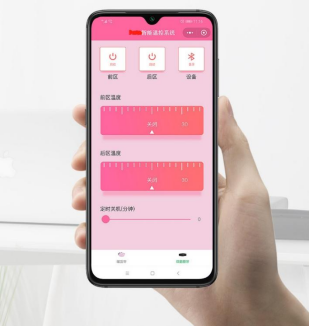
3. 无手机APP的蓝牙遥控器方案
该方案是兼顾便捷性与智能化的中端温控方案,核心组成的为“蓝牙遥控器(独立手持端) + 柔性加热片 + 蓝牙接收控制器 + PWM驱动 + NTC测温传感器”,其工作逻辑与手机APP方案类似,但无需手机配对,通过独立的蓝牙遥控器直接发送指令,蓝牙接收控制器接收指令后,由MCU控制PWM驱动MOS管,调节加热功率与温度,NTC传感器实时反馈温度,确保温控精准。
核心优势:操作便捷,即按即控,无需手机配对,适合各类人群使用;具备无线控制、精准温控功能(温控精度±2℃),方案成熟,故障率低;相比手机APP方案,成本略低,性价比更高。
核心劣势:价格较高,相比有线三档方案,成本提升明显;遥控器需单独配备,存在丢失、损坏的风险。
适配场景:中端消费电子、汽车加热、智能家居,如加热护腰/护膝、中端汽车座椅加热、恒温床垫。
4. 433MHZ/2.4GHZ非标射频遥控方案
该方案是工业级与中端消费类通用的温控方案,核心组成的为“柔性加热片 + 433MHz或2.4G无线收发模块 + 编码解码芯片 + 驱动电路”,其工作逻辑是:遥控器通过433MHz或2.4G射频信号发送控制指令,无线收发模块接收指令后,通过编码解码芯片解析指令,驱动电路调节通过加热片的电流,实现温度调节、开关控制;可根据需求设置多档温控或无级温控,NTC传感器可按需搭配,提升温控精度。
核心优势:价格适中,性价比高;方案成熟,兼容性好,可适配不同功率、不同尺寸的柔性加热片;射频信号穿透性强,可实现远距离控制(433MHz传输距离可达100米以上,2.4G可达50米以上),适合复杂安装环境。
核心劣势:温控精度略低于蓝牙方案(±3℃);智能化程度不如手机APP方案,无数据记录功能。
适配场景:工业设备、户外设备、智能家居,如精密仪器预热、半导体设备加热、户外加热设备、智能家居恒温地毯。
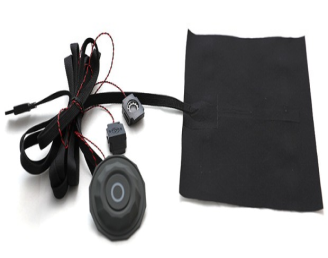
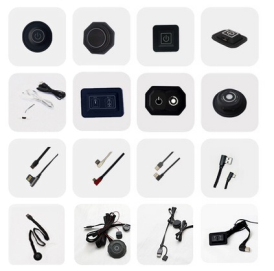
5. 基于WIFI模块的手机APP无级温度控制方案
该方案是高端智能类加热产品的核心温控方案,核心组成为“柔性加热片 + WiFi模块(可搭配BLE双模) + MCU主控 + PWM驱动电路 + NTC测温传感器”,其工作逻辑是:设备接入家庭局域网,手机APP通过WiFi发送无级调温、开关等指令,WiFi模块接收指令后,经MCU主控解析,结合NTC传感器采集的实时温度,通过PWM驱动电路精准调节加热片功率,实现无级恒温控制。
核心优势:控温精度高(±1~2℃),支持无级精准调温;可实现本地+远程双控制,适配智能家居联动;功能可扩展,支持定时、语音控制、设备共享,方案扩展性强。
核心劣势:硬件及认证成本较高;需完成WiFi配网,对网络环境有依赖;无网络时远程控制功能失效。
适配场景:高端智能理疗设备、商用热敷仪器、智能家居加热产品,如智能恒温理疗垫、商用热敷仪、全屋智能恒温座椅、可远程管理的加热设备。

Temperature control solutions for flexible electric heating pads are mainly selected based on the needs of the application scenario (such as temperature control accuracy, ease of operation, cost budget, and installation environment). At present, the mainstream temperature control solutions in the industry fall into five categories, each with clear applicable scenarios, covering the full range from basic manual control to high-end intelligent control:
1. Wired three-level temperature control solution (four states: off/low/medium/high)
This is the most basic and mature temperature control solution. Its core composition is "flexible heating pad + three-position mechanical/tact switch + simple voltage step-down/current-limiting circuit". The voltage step-down/current-limiting circuit can be implemented with resistors, diodes, and gear switching switches. By switching different current-limiting resistors, the current through the heating pad is changed, thereby achieving low, medium, and high temperature adjustment, and it also has an off position, providing four-state control.
Core advantages: simple structure, mature production process, low price, no complex electronic components, low failure rate, highest safety and reliability, and extremely low later maintenance cost; convenient operation, suitable for elderly people and ordinary users, with no steep learning curve.
Applicable scenarios: mass consumer products that are cost-sensitive and do not require high temperature control accuracy, such as portable hand warmers, heated gloves, ordinary constant-temperature cup pads, and low-end car seat heating (basic version).
2. Mobile APP stepless temperature control solution based on Bluetooth technology
This is a high-end intelligent temperature control solution. Its core composition is "flexible heating pad + Bluetooth BLE module + MCU (Microcontroller Unit) + PWM-driven MOSFET + NTC temperature sensor". Its operating logic is: the NTC temperature sensor collects the heating pad's temperature data in real time and transmits it to the MCU; the MCU establishes a connection with the mobile APP through the Bluetooth BLE module; the user can set the temperature range through the APP (stepless adjustment, e.g., 30°C-60°C); based on APP commands, the MCU uses PWM to drive the MOSFET to regulate the current through the heating pad, achieving precise temperature control. At the same time, the APP can record temperature data, set scheduled on/off, and adjust heating power for intelligent management.
Core advantages: high degree of intelligence, supports wireless control and stepless temperature control (temperature control accuracy up to ±1°C), and provides value-added functions such as data recording and scheduled control, delivering an excellent user experience; suitable for precise temperature control needs in complex scenarios.
Core disadvantages: high price, relatively high cost of electronic components (Bluetooth module, MCU, NTC sensor), complex production process, and slightly higher later maintenance cost; requires phone pairing, relatively complex operation, suitable for younger users or high-end users.
Applicable scenarios: high-end consumer electronics, medical equipment, high-end car seat/steering wheel heating, such as smart hot compress applicators, postoperative hot compress equipment, and high-end new energy vehicle heating modules.
3. Bluetooth remote control solution without a mobile APP
This is a mid-range temperature control solution that balances convenience and intelligence. Its core composition is "Bluetooth remote control (independent handheld device) + flexible heating pad + Bluetooth receiving controller + PWM drive + NTC temperature sensor". Its operating logic is similar to the mobile APP solution, but no phone pairing is required. Commands are sent directly through the independent Bluetooth remote control. After receiving commands, the Bluetooth receiving controller uses the MCU to control PWM-driven MOSFETs, adjusting heating power and temperature, while the NTC sensor provides real-time temperature feedback to ensure precise temperature control.
Core advantages: convenient operation, press-to-control, no phone pairing required, suitable for all types of users; provides wireless control and precise temperature control (temperature control accuracy ±2°C), mature solution, low failure rate; compared with the mobile APP solution, the cost is slightly lower and the cost-performance ratio is higher.
Core disadvantages: relatively high price; the cost increase is significant compared with the wired three-level solution; the remote control must be separately provided and faces the risk of loss or damage.
Applicable scenarios: mid-range consumer electronics, automotive heating, smart home, such as heated waist supports / knee supports, mid-range car seat heating, and constant-temperature mattresses.
4. 433MHZ/2.4GHZ non-standard RF remote control solution
This is a temperature control solution commonly used in industrial-grade and mid-range consumer products. Its core composition is "flexible heating pad + 433MHz or 2.4G wireless transceiver module + encoding/decoding chip + drive circuit". Its operating logic is: the remote control sends control commands via 433MHz or 2.4G RF signals; after receiving the command, the wireless transceiver module parses it through the encoding/decoding chip, and the drive circuit regulates the current through the heating pad to achieve temperature adjustment and on/off control. Multi-level temperature control or stepless temperature control can be configured as needed, and NTC sensors can be optionally added to improve temperature control accuracy.
Core advantages: moderate price and high cost-performance ratio; mature solution, good compatibility, adaptable to flexible heating pads of different powers and sizes; strong RF signal penetration enables long-distance control (433MHz transmission distance can reach over 100 meters, and 2.4G can reach over 50 meters), suitable for complex installation environments.
Core disadvantages: temperature control accuracy is slightly lower than the Bluetooth solution (±3°C); less intelligent than the mobile APP solution, and no data recording function.
Applicable scenarios: industrial equipment, outdoor equipment, smart home, such as precision instrument preheating, semiconductor equipment heating, outdoor heating equipment, and smart home constant-temperature carpets.
5. Mobile APP stepless temperature control solution based on a WiFi module. This is the core temperature control solution for high-end smart heating products. Its core composition is "flexible heating pad + WiFi module (can be paired with BLE dual-mode) + MCU main control + PWM drive circuit + NTC temperature sensor". Its operating logic is: the device connects to the home local area network; the mobile APP sends commands such as stepless temperature adjustment and on/off through WiFi; after receiving the command, the WiFi module parses it via the MCU main control, combines it with the real-time temperature collected by the NTC sensor, and precisely adjusts the heating pad power through the PWM drive circuit, achieving stepless constant-temperature control.
Core advantages: high temperature control accuracy (±1~2°C), supports stepless precise temperature adjustment; supports both local and remote control, adapting to smart home integration; functions are expandable, supporting scheduling, voice control, and device sharing, with strong solution scalability.
Core disadvantages: relatively high hardware and certification costs; WiFi network configuration is required, and the solution depends on the network environment; remote control becomes unavailable when there is no network.
Applicable scenarios: high-end smart physiotherapy equipment, commercial hot compress instruments, and smart home heating products, such as smart constant-temperature physiotherapy pads, commercial hot compress devices, whole-home smart constant-temperature seats, and remotely manageable heating equipment.
Original link: https://mp.weixin.qq.com/s/v0u45Y0-I8l6jIIimNO4Pw