
一台不能打电话、不能装APP、离开手机就是块板砖的“墨水屏屏幕”,凭什么卖2000?
大上给他起了一个十六个字的超长名字——6.7寸超高刷墨水屏手机显示器Link(第二代)。

大上Link 2的本质,就是一台6.7英寸的便携墨水屏显示器。
既然是显示器,就得外接电源、外接主机。这里的主机是你的手机。
这是它的优点,也是它的缺点。优点和缺点同时出现、又不互相对立,这在墨水屏品类里极其罕见,我目前见过的只有这一款。
老办法:当一件事情超出你的认知,别急着下结论,先暗中观察。
屏幕是元太科技6.7英寸墨水屏,300PPI,铝合金外壳,裸机155克,带扬声器。
官方刷新率给到了60Hz超高刷,这是相对一代的关键升级。
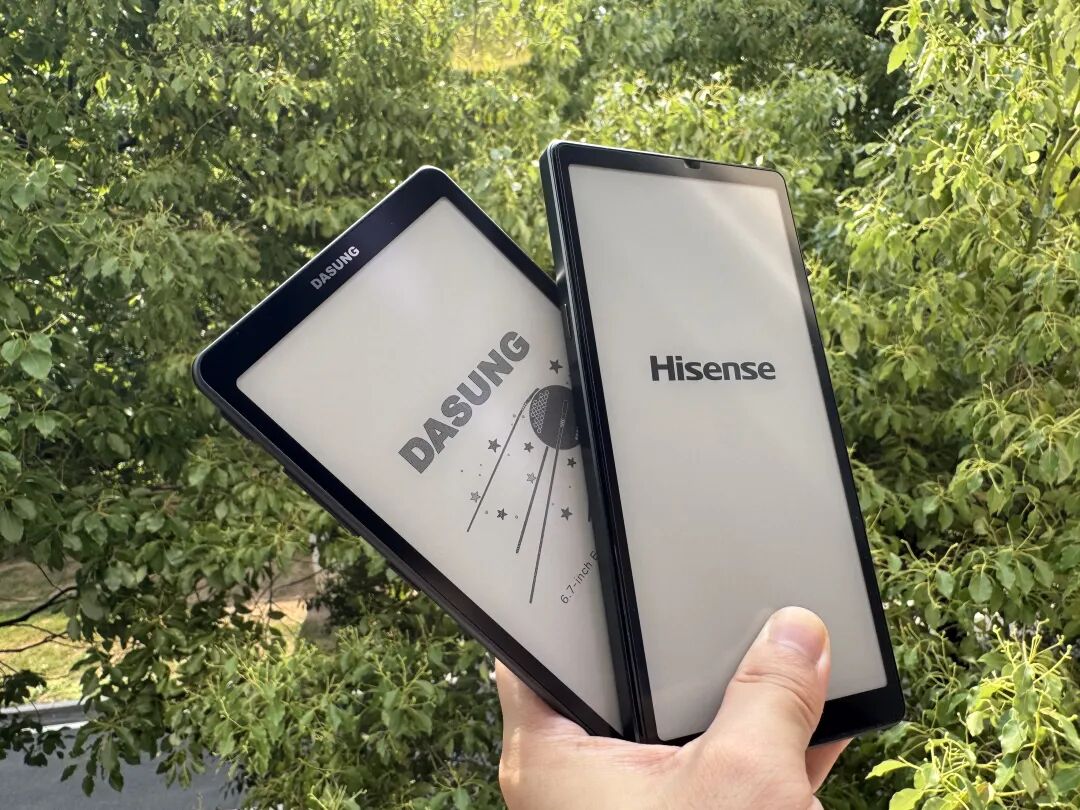
老粉第一眼大概率会觉得它像一位故人——海信Hi Reader。两台并排放,不看logo几乎分不出来。
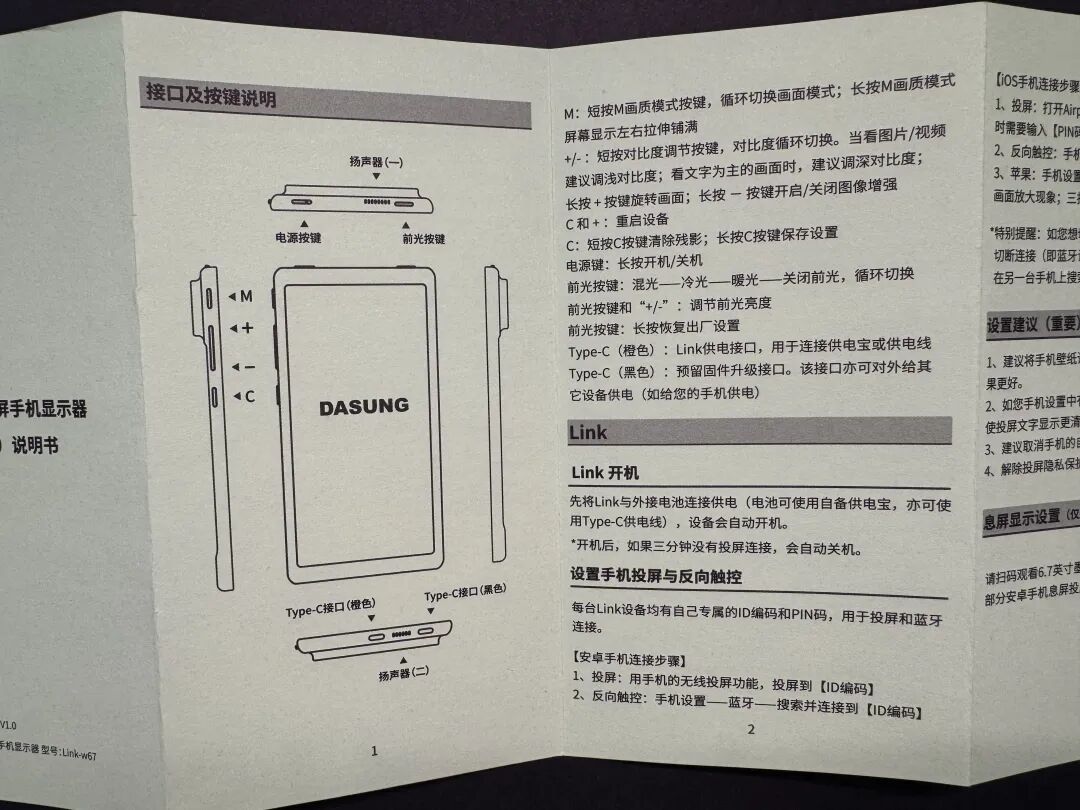
全身5个机械按键,底部2个Type-C接口。
具体按键组合代表什么功能,说明书里都写了。
如果你没用过一代,这次说明书一定要细读,否则很难自己摸明白。
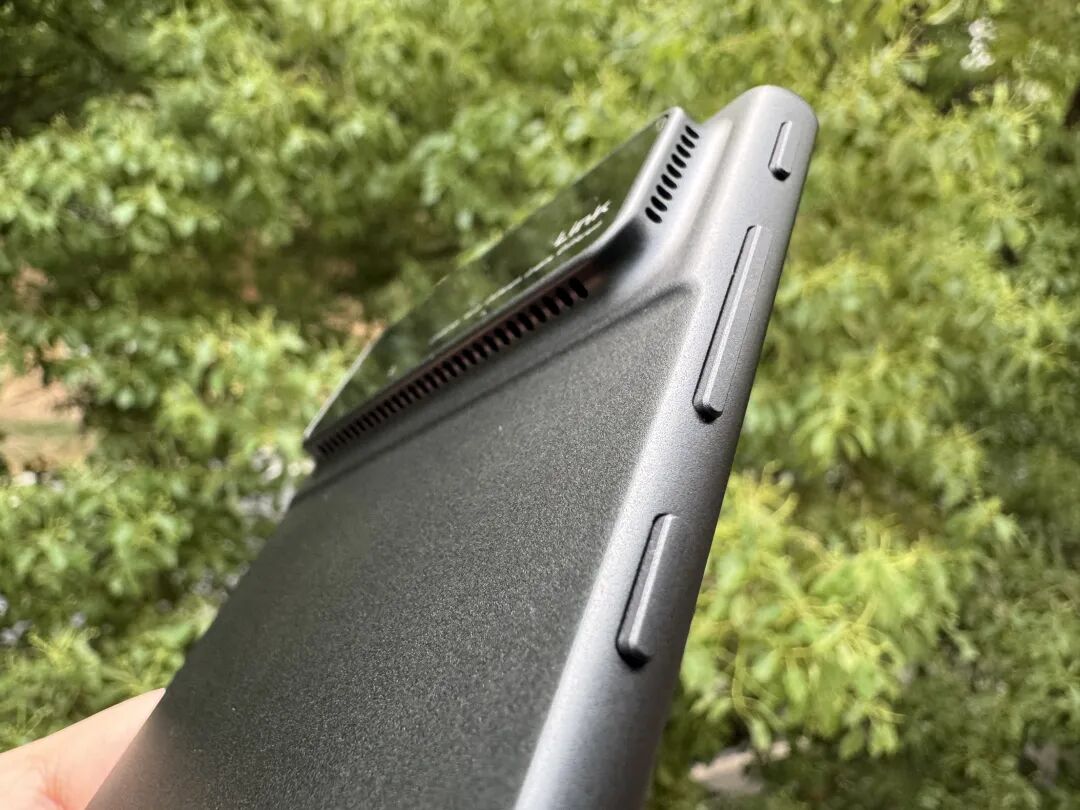
背面有一块凸起,看着像相机模组,其实是装饰,三面布满散热孔。
这玩意儿当显示器用的时候,发热相当明显,散热孔不是装样子。
前光只能通过按键调节,三档:冷光、混光、暖光。
我手上这台均匀度尚可,但顶部可见灯珠,存在漏光。

大上Link 2的工作原理很简单:通过手机投屏,给手机配一块副屏。手机显示什么,它就显示什么。
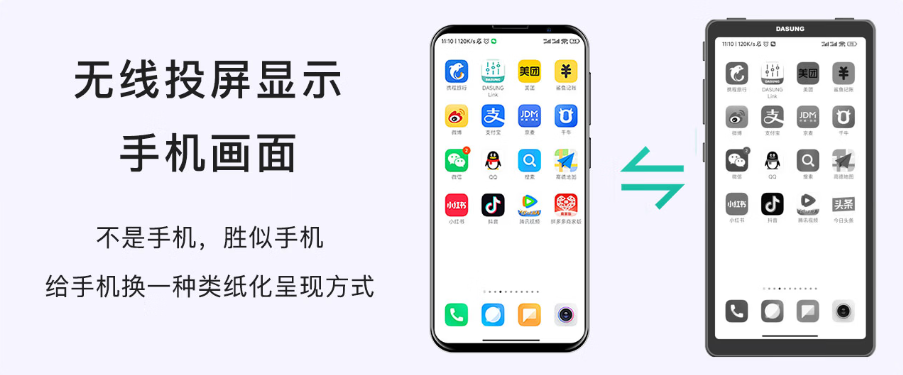
第二代Link整机适配了Miracast和AirPlay无线显示协议,广泛兼容主流安卓、鸿蒙和iOS手机。
更关键的是,大上Link 2支持反向触控——你在Link 2屏幕上的点选、滑动、翻页,会同步操控源手机。
这意味着把手机放进口袋,单手操作Link 2也能完成绝大多数日常动作。这也是它从一代延续下来的核心卖点。
但镜像方案也带来一个潜在问题:它的体验上限,完全取决于你的手机。
我挑了三个典型系统场景实测:
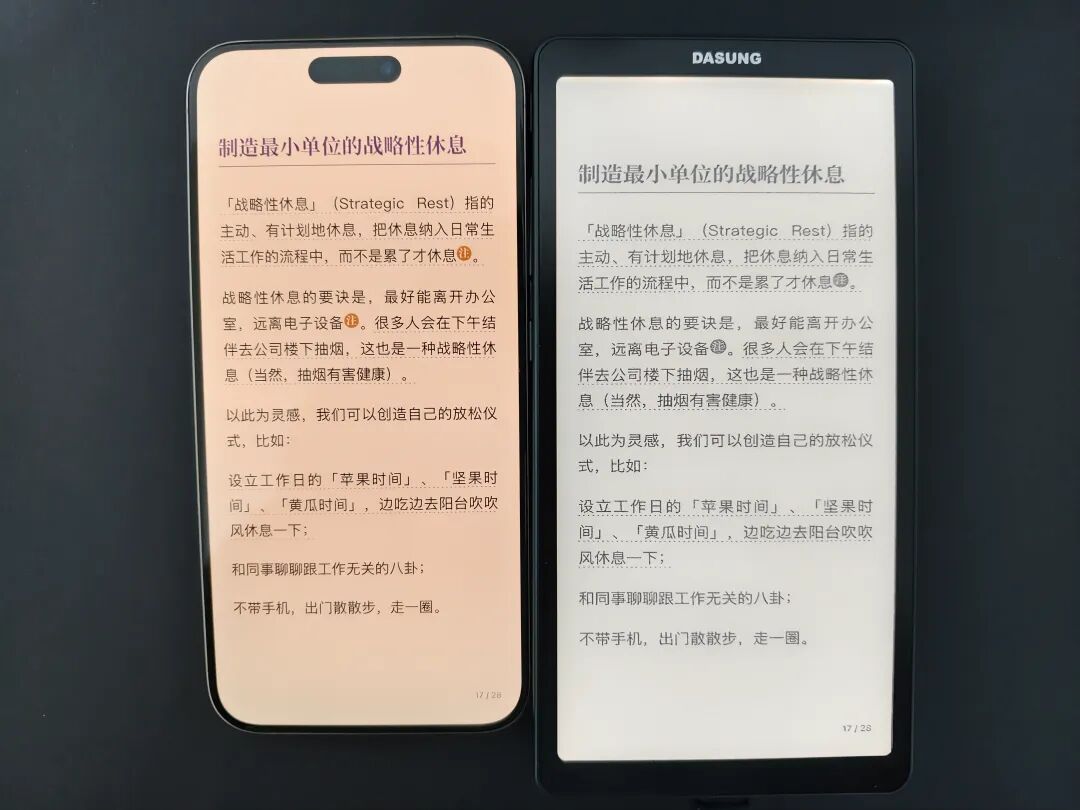
iOS:微信读书,文字流场景
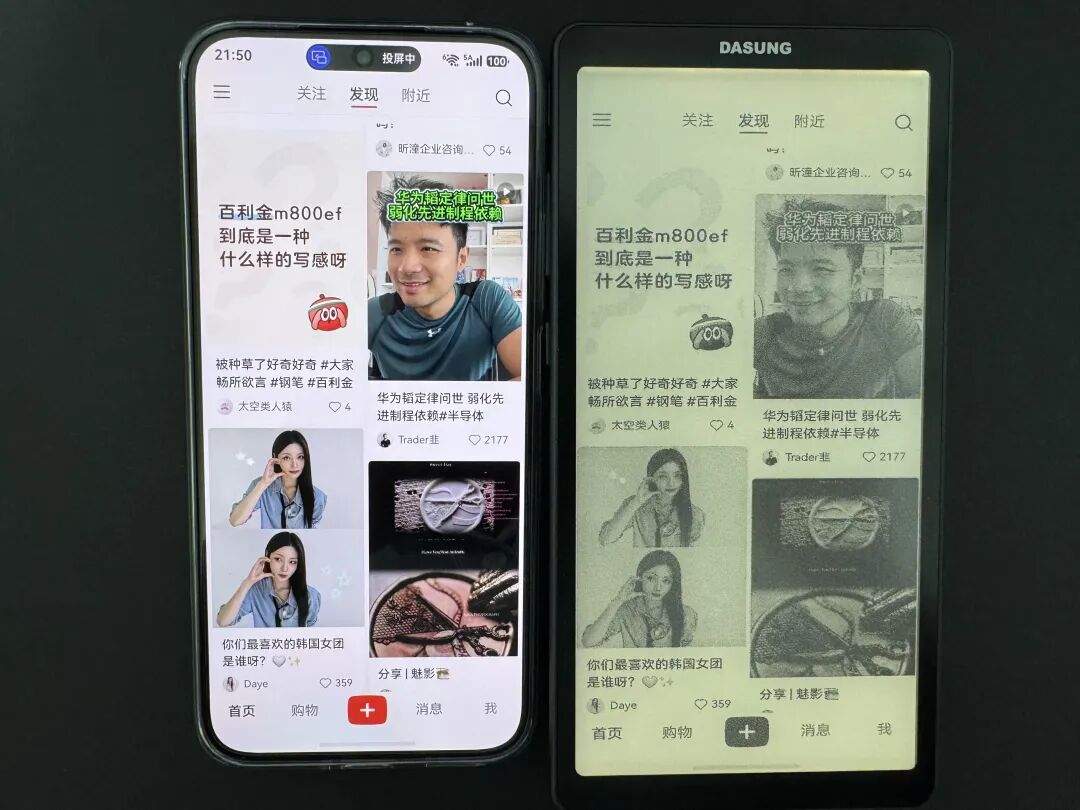
纯血鸿蒙:小红书瀑布流,验证图文丝滑度
安卓16:番茄小说,验证常驻后台的稳定性

三个场景跑下来都算合格。
但绑定主力手机之后,字体、背景、对比度都需要重新精调一次——它是黑白屏,原本为彩色OLED设计的UI放上去,不调就难看。
也就是说,手机性能有多强,它就有多强。它本质上是一面镜子。你手机可以年年换,这块屏不用跟着换。

它面向的用户非常直接——已经有眼疾、OLED/LCD屏都看不舒服、又嫌墨水屏手机性能太弱的人。
这类人急需一块舒服的屏,越快越好。
大上Link 2某种程度上解决了这个问题,但代价是,你出门除了手机,还得带:
这块6.7英寸的屏
中间的连接线
一块磁吸电池
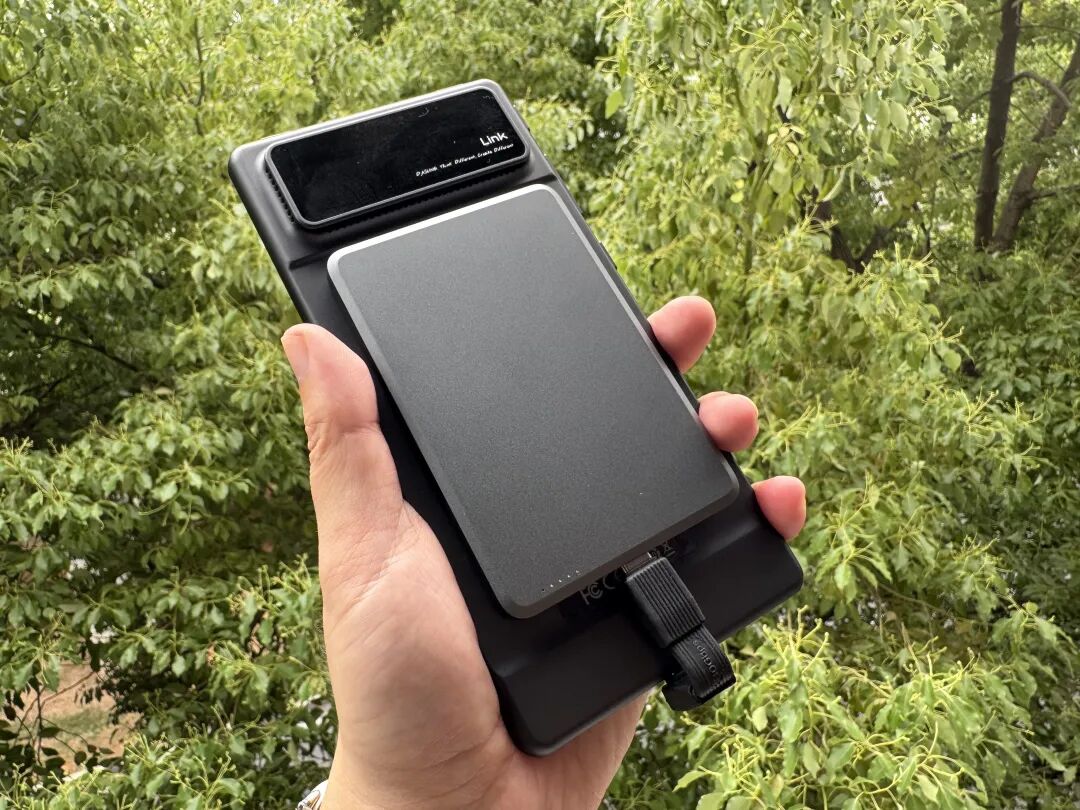
二代取消了一代的专属电池坞,改为支持第三方磁吸卡片式供电宝,灵活性提升,但配件数量没变。
这一套原装组合,称下来大约267克,作为参照,iPhone 15 Pro Max裸机是221克。
非要说优点,就是磁吸电池没电可以热插拔备用,不中断使用。
但说实话,我更希望它做成一体化——观感清爽,不像现在这么累赘。
可问题是,电池一旦塞进机身,散热又得重做,结构又得大改。这估计是Link 3代的事了。
大我用堆料把墨水屏手机的硬件性能拉上去了,文石用系统优化让墨水屏手机更顺手了,这两条路都已经还原了手机70%左右的功能。
但它们终究不是手机性能完全体。
大上Link 2不同,它直接借用你现役手机的性能,把手机功能的还原度做到了90%,这是它强于前两者的地方。
但短板同样突出:
只有黑白,不显示彩色
并非所有手机都能完美适配
需要外部供电,看似便携、实则臃肿
多数手机投屏时不能息屏,原机仍在耗电
很多人选墨水屏,纠结来纠结去,根子是太贪心。又要护眼、又要彩色、又要性能、又要便携、又要便宜。世界上没有这种东西。
大上Link一代刚出来时,我觉得产品形态怪异。
二代到手,不觉得怪异了,但还是觉得缺点什么。
在某些特定场景下,它确实解决了问题——尤其是对干眼症患者,价值是真实存在的。
对其他人,有钱时想起来护眼一下,没钱时蒜鸟蒜鸟,眼睛也没那么娇贵。
比起按部就班的墨水屏产品,有时候看看这种稀奇古怪的家伙,也挺有意思。
下一款我比较期待的,是Bigme大我前两个月宣发的那款“双屏”手机,据说已经开始发货了,到时候再看看。
Why would a "e-paper screen" that can't make calls, install apps, or function as a brick without a phone, sell for 2000 yuan?
The creator gave it a super-long 16-character name: "6.7-inch High-Refresh E-Paper Phone Display Link (Second Generation)."
PART 01
Let's clarify the positioning
The essence of the Bigme Link 2 is a 6.7-inch portable e-paper display.
Since it's a display, it requires an external power source and a host. In this case, the host is your smartphone.
This is both its strength and its weakness. The fact that these two attributes appear simultaneously yet do not contradict each other is extremely rare in the e-paper category; I've only seen it with this model.
The old rule: when something exceeds your expectations, don't rush to conclusions; observe first.
PART 02
Hardware: Familiar Yet Distinct
The screen is a 6.7-inch, 300PPI, e-paper module from E Ink, housed in an aluminum alloy shell. The bare unit weighs 155 grams and includes a speaker.
The official refresh rate is listed at 60Hz, which is the critical upgrade from the first generation.
Old fans are likely to mistake it for a former acquaintance—the Hisense Hi Reader. Placed side by side, they are nearly indistinguishable without checking the logo.
It features five physical buttons and two Type-C ports at the bottom.
The specific functions of the button combinations are detailed in the manual.
If you haven't used the first generation, you must read the manual carefully this time, as the functions are not immediately intuitive.
The back has a protruding section that resembles a camera module but is actually a decorative element with ventilation holes on three sides.
When used as a display, this device generates significant heat, so the ventilation holes are not merely aesthetic.
The front light can be adjusted via the buttons through three settings: cold light, mixed light, and warm light.
The uniformity of my unit is acceptable, though there is visible light leakage at the top where the LEDs are located.
PART 03
Principle: The Phone's Mirror Screen
The working principle of the Bigme Link 2 is straightforward: it acts as a secondary screen for your phone, mirroring its display. Whatever the phone shows, the Link 2 replicates.
The second generation supports both Miracast and AirPlay wireless display protocols, ensuring broad compatibility with mainstream Android, HarmonyOS, and iOS devices.
More importantly, the Link 2 supports reverse touch control—actions performed on the Link 2 screen (taps, swipes, page turns) are synchronized with the source phone.
This allows for the phone to be kept in your pocket while most daily operations are performed single-handedly on the Link 2. This is the core selling point carried over from the first generation.
However, this mirroring approach introduces a potential issue: the performance of the Link 2 is entirely dependent on the performance of your phone.
I tested three typical scenarios:
iOS: WeChat Reading, for text-based experiences.
Pure HarmonyOS: Xiaohongshu waterfall feed, to verify image and text smoothness.
Android 16: Tomato Novel, to test background stability during long reads.
All three scenarios performed reasonably well.
However, once bound to the primary phone, the font, background, and contrast need to be re-tuned, as the black-and-white nature of the e-ink screen requires optimization for colored OLED interfaces.
Essentially, the device's performance will be as good as the phone it is connected to. The phone can be upgraded annually, while this screen can remain constant.
PART 04
One-to-Three: Solving Problems with Compromise
The target demographic is very specific: individuals with eye sensitivity who struggle with OLED/LCD screens but find standard e-ink phones lacking in performance.
These users urgently need a comfortable screen, and they need it quickly.
The Bigme Link 2 partially solves this problem, but at a cost. To use it, you must carry:
The 6.7-inch screen itself.
The connecting cable.
A magnetic battery pack.
The second generation has replaced the dedicated battery dock with support for third-party magnetic card-style power banks, increasing flexibility but maintaining the number of accessories required.
The total weight of this standard setup is approximately 267 grams, for comparison, the iPhone 15 Pro Max weighs 221 grams.
The advantage is that the magnetic battery is hot-swappable, allowing for uninterrupted use if the battery runs out.
However, the ideal scenario would be an integrated design, which would improve aesthetics and reduce the burden of carrying multiple components.
Structurally, integrating the battery into the body would require significant redesign and thermal management. This is likely a feature for the Link 3 generation.
PART 05
Where Does it Fit In?
Bigme has significantly improved the hardware performance of e-ink phones, and companies like Boox have optimized the operating system to make them more responsive. Together, these advancements have restored approximately 70% of the functionality of a standard smartphone.
However, they are not complete phone replacements. The Bigme Link 2, by leveraging the processing power of the existing smartphone, achieves a 90% restoration of phone functionality, which is its primary advantage over competitors.
Its drawbacks are equally pronounced:
The display is monochrome (black and white), lacking color.
Not all smartphones are perfectly compatible.
It requires an external power source, making it less portable than a standalone device.
During screen sharing, many smartphones cannot enter a deep sleep state, meaning the primary device continues to consume power.
PART 06
Final Thoughts
Many people hesitate when choosing an e-ink device because they want it all: eye protection, color, performance, portability, and affordability. Such a device does not exist.
When the first generation of the Link was released, I found the form factor confusing. With the second generation in hand, I no longer find it strange, but I still think it is missing something.
In specific scenarios—particularly for those with severe dry eye syndrome—the device provides real value.
For others, it may be a luxury item to protect one's eyes occasionally, rather than a daily necessity.
Compared to more mainstream e-ink products, examining these specialized devices is an interesting exercise.
Looking forward, I am curious about the "dual-screen" smartphone prototype developed by Bigme, which is said to have begun shipping. A review of that would be fascinating.
Original Link: https://mp.weixin.qq.com/s/Hc0UVfMH5fjf6i3u_XyIRg
The next one I'm looking forward to is the "dual-screen" phone that Bigme announced a couple of months ago; it's said to have started shipping, so we'll see how it turns out.
原文链接: https://mp.weixin.qq.com/s/Hc0UVfMH5fjf6i3u_XyIRg