
原文链接:https://mp.weixin.qq.com/s/_o-yEhFhYwwROaxQVbBP_g
"凌晨2点,我第37次打开抖音,眼睛酸得像被撒了辣椒面。"
哎我跟你说,这真不是我在矫情,这就是咱们这届年轻人的日常啊!
你想想,咱一天盯着屏幕能超过10个小时——手机、电脑、平板轮着来,那蓝光唰唰往眼睛里灌,跟拿小刀剌视网膜似的。近视度数蹭蹭涨,眼睛干得跟沙漠似的,睡前刷手机刷到失眠……咱明明挺爱看书的,结果愣是被屏幕给整废了。
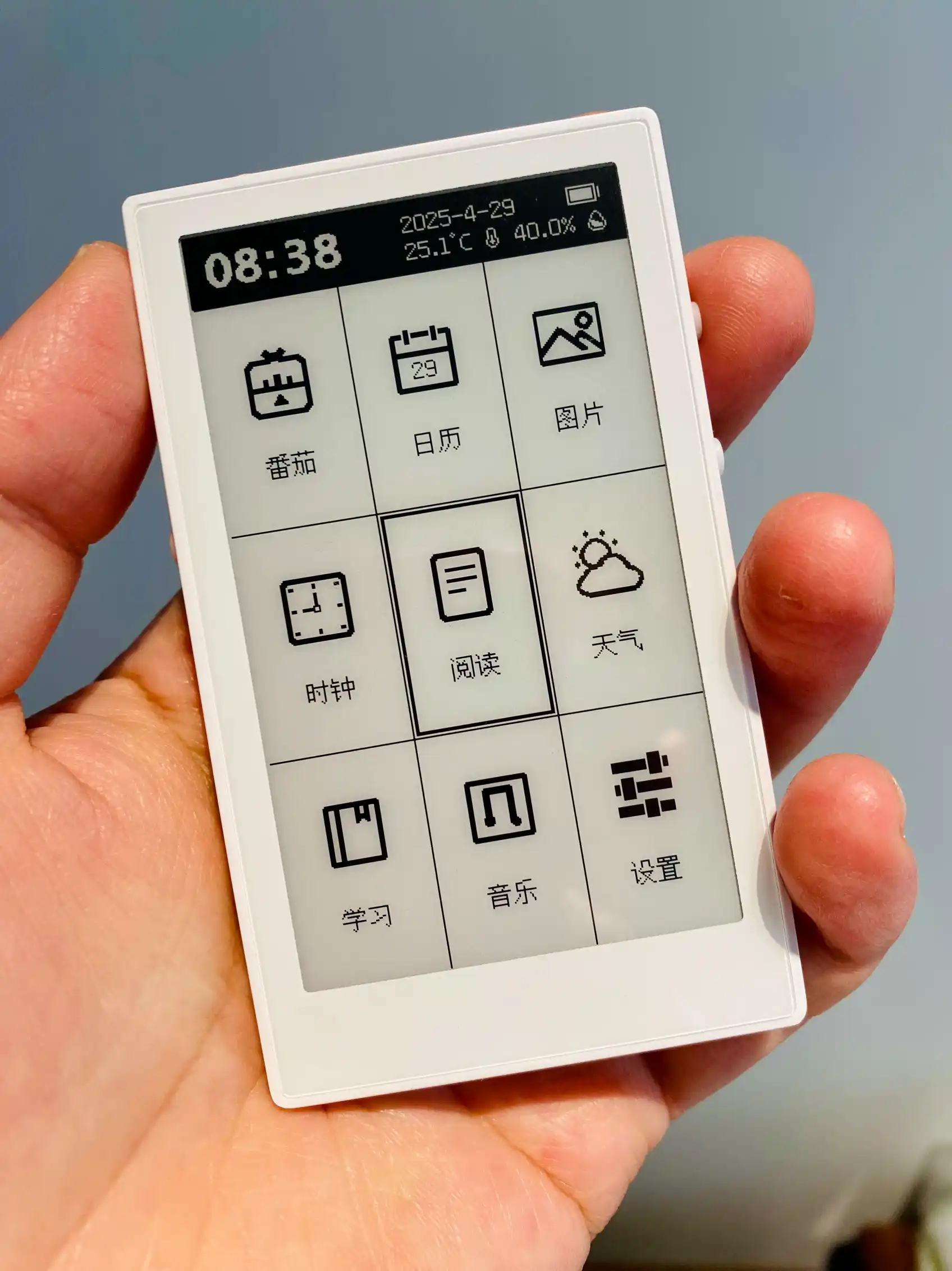
但最近我发现一个特有意思的事儿:我身边好多朋友开始"反内卷"了。他们不整那些花里胡哨的护眼灯,也不买死贵的防蓝光眼镜,而是悄咪咪摸出来一台电子墨水屏阅读器。
你别说,这玩意儿看着挺复古,但用起来真挺香的。
一、为啥年轻人突然迷上这"电子纸"了?
1. 它真的不伤眼!
墨水屏的原理特简单——它自己不会发光,就靠反射环境光来显示,跟看纸质书一模一样。没有频闪、没有蓝光,你看一下午眼睛也不会又干又酸。
而且数据摆在这儿呢:2025年中国电子墨水屏市场规模都干到4590亿了,护眼就是最大的驱动力。眼睛是自己的,这钱花得值啊!
2. 它能帮你"戒手机"!
这一点真的被严重低估了。
你拿起一台只能看书的阅读器,微信不会弹窗、抖音不会推送、微博不会轰炸你。它就像一个数字时代的"禅修室",逼着你进入那种沉浸式阅读的状态。
咱说实话,现在这注意力碎得跟饺子馅似的,能专注看会儿书,本身就是一种奢侈。
3. 它比你想象的要酷多了!
你可能觉得墨水屏还是Kindle时代那种"只能看黑白字"的老古董?大错特错!
2026年的墨水屏早就鸟枪换炮了:
• 彩色墨水屏已经挺成熟了,Kaleido 3技术能显示4096种颜色,看漫画、刷图文完全OK,2024年彩色电子纸销量直接涨了207.8%
• 高刷技术都突破60Hz了,刷信息流、甚至聊微信都不带卡的
• 开放安卓系统,微信读书、起点读书、B站漫画,想装啥装啥
• 还有AI功能,智能摘要、实时翻译、语音转文字,学习办公效率直接起飞
----
二、2026年最值得入手的5款,我帮你挑好了!
颜值担当:掌阅Neo3
适合谁: 学生党、颜值控
一体化后盖+圆润边角,有告白、沉墨、语绿好几种配色,完全不是传统阅读器那种"性冷淡"风格。6英寸Carta1300屏幕,300PPI清晰度,30级冷暖双色温调节,晚上窝被窝里看书也不刺眼。
学生党闭眼入就完事儿了,性价比贼高。
性能怪兽:掌阅Neo3 Ultra
适合谁: 多任务党、APP重度用户
8核CPU + 4GB运存,在墨水屏界简直就是"性能天花板"。同时开微信读书+笔记软件+词典,切换贼流畅。如果你之前嫌阅读器"太慢太卡",这款能直接刷新你的认知。
彩漫神器:科大讯飞起点阅读器
适合谁: 漫画党、网文爱好者
7英寸彩色墨水屏,黑白300PPI/彩色150PPI,内置起点读书全量资源,还能看榜单、刷本章说。看《一人之下》《咒术回战》彩色版,体验真的吊打黑白屏。
而且还送起点会员,网文党直接狂喜!
手机平替:文石P6+
适合谁: 通勤族、碎片时间阅读者
6.13英寸,140克比手机还轻,塞口袋里毫无压力。等地铁、排队买奶茶的时候掏出来看几页,一年下来能多读20本书。
还支持手写笔(得另买),做批注、画思维导图都挺方便的。
续航王者:墨案迷你阅超核版
适合谁: 差旅党、电量焦虑患者
6000mAh电池,待机90天,还能反向给手机充电!5.84英寸手机造型,凯夫拉纹理后盖,手感特好还防滑。
出差一周都不用带充电器,这才是真正的"说走就走"啊。
三、选购避坑指南:这3个坑千万别踩!
❌ 坑1:盲目追求"Kindle情怀"
Kindle已经退出中国市场了,云端服务也关了,封闭系统传书麻烦、资源还受限。除非你是收藏党,否则2026年买Kindle真的等于49年入国军。 国产开放系统阅读器,体验早就全面超越了。
❌ 坑2:只看参数不看场景
• 经常看PDF/论文?→ 选10英寸以上大屏(比如汉王N10系列)
• 纯文字阅读+通勤?→ 选6英寸小屏(比如文石Poke6)
• 爱看彩漫/图文?→ 选彩色墨水屏(比如掌阅Light4C)
❌ 坑3:忽视系统开放性
封闭系统(比如掌阅部分型号)续航更好、更沉浸,但只能装指定APP;开放系统(安卓)可以自由安装微信读书、知乎、甚至B站漫画。年轻人建议优先选开放系统,自由度更高。
四、写在最后:咱买的到底是啥?
有人说,花大几百买台只能看书的设备,不如直接用手机,反正都能看。
但我想说:咱买的不是设备,是"不被打扰的权利"。
你想啊,在这个信息爆炸的时代,手机就是个"时间黑洞",而阅读器是个"时间容器"。它帮你把碎片时间重新拼成完整的阅读时光,让你在地铁上、睡前、咖啡馆的角落里,拥有一段只属于自己的小天地。
年轻人不是不爱阅读,咱只是需要一种更护眼、更专注、更酷的方式来阅读。
所以啊,如果你也厌倦了刷手机刷到眼瞎,不如给自己一个"叛逃"的机会?
Original link: https://mp.weixin.qq.com/s/_o-yEhFhYwwROaxQVbBP_g
"At 2:00 AM, I opened Douyin for the 37th time, and my eyes felt as if they had been sprinkled with chili powder."
You know, I'm not being overly sensitive — this is just the daily routine for today's young people.
Think about it: we spend over 10 hours staring at screens every day — phones, computers, tablets, all taking turns blasting our eyes with blue light, which feels like cutting the retina with a knife. My nearsightedness keeps increasing, my eyes are as dry as a desert, and I struggle with insomnia from scrolling before bed. We actually like reading books, but screens are destroying us.
Recently, I noticed something interesting: many of my friends are starting to "fight back" by breaking away from the rat race. They aren't buying flashy eyestrain lamps or expensive blue light glasses; instead, they quietly pull out an electronic ink display reader.
You might think it looks old-fashioned, but it's actually very practical to use.
1. Why are young people suddenly obsessed with these "electronic papers"?
Because they are truly easy on the eyes. The principle of ink screens is simple: they don't emit light themselves; they rely on reflecting environmental light to display, just like a paper book. There's no flicker, no blue light — you can read for hours without your eyes feeling strained or dry.
The data speaks for itself: in 2025, the Chinese market for electronic ink displays reached 459 billion yuan, with eye protection being the primary driving force. Your eyes are your own — investing in them is worth it.
2. They help you "quit your phone addiction."
This point is often underestimated. When you pick up a reader that can only read books, there are no pop-up notifications from WeChat, no recommendations from Douyin, and no bombardment from Weibo. It's like a "meditation room" in the digital age, forcing you into a state of immersive reading.
Let's be honest — attention is fragmented these days. Being able to concentrate on reading is a luxury.
3. They are cooler than you think.
Do you think ink screens are still stuck in the Kindle era, only showing black-and-white text? That's outdated. In 2026, ink screens have been upgraded:
• Color ink screens are now mature — Kaleido 3 technology displays 4096 colors, making it perfect for comics and illustrations. In 2024, sales of color electronic paper increased by 207.8%.
• High refresh rates of up to 60 Hz make browsing feeds or even chatting on WeChat smooth.
• Open Android systems allow installation of apps like WeChat Reading, Qidian Novels, and Bilibili Comics — anything you want.
• AI features such as smart summaries, real-time translation, and voice-to-text are boosting learning and productivity.
2. The 5 most worth-buying models in 2026 — I've picked them out for you.
Beauty Queen: Zhangyue Neo3
Suitable for: Students, appearance enthusiasts
With an integrated back cover, rounded corners, and a palette including "Love," "Midnight," and "Green Language," it breaks away from the cold, minimalist style of traditional readers. The 6-inch Carta1300 screen offers 300 PPI resolution and 30 levels of warm-cool color adjustment, making it gentle on the eyes even at night.
Students can blindly choose this model — it's high cost-performance.
Performance Beast: Zhangyue Neo3 Ultra
Suitable for: Multitaskers, heavy app users
With an 8-core CPU and 4 GB of RAM, it's the "performance ceiling" among ink screens. You can run WeChat Reading, note-taking software, and a dictionary simultaneously without lag. If you've previously found readers too slow or buggy, this will change your perception.
Color Comic Master: iFLYTEK Qidian Reader
Suitable for: Comic fans, web novel lovers
The 7-inch color ink screen supports 300 PPI (black-and-white) / 150 PPI (color), pre-loaded with Qidian's full library, including rankings and real-time comments. Reading color comics like "The King of Fighters" or "Jujutsu Kaisen" is a far better experience than on black-and-white screens.
It even includes a Qidian membership, which is perfect for web novel readers.
Phone Replacement: BOOX P6+
Suitable for: Commuters, those with fragmented reading time
At 6.13 inches and weighing 140 grams, it's lighter than a phone and fits easily into a pocket. Reading a few pages while waiting for the subway or in line adds up to 20+ books a year.
It also supports a stylus (sold separately) for annotations and mind maps.
Battery King: Mobian Mini Ultra Edition
Suitable for: Business travelers, those with battery anxiety
The 6000 mAh battery lasts for 90 days in standby mode and can even charge your phone. The 5.84-inch phone-like design features a Kevlar texture cover that is both stylish and slip-resistant.
You don't need to bring a charger for a week-long business trip — that's true portability.
3. Buying guide: 3 pitfalls to avoid.
❌ Pitfall 1: Blindly chasing "Kindle nostalgia"
Kindle has exited the Chinese market, and its cloud services are down. The closed system makes transferring books inconvenient, and resources are limited. Unless you're a collector, buying a Kindle in 2026 is a bad decision. Domestic open-system readers have long surpassed it in experience.
❌ Pitfall 2: Focusing only on specs, not scenarios
• If you often read PDFs or papers → Choose a large screen (10+ inches, like Hanwang N10).
• If you read pure text and commute → Choose a small screen (6 inches, like BOOX Poke6).
• If you love color comics or illustrations → Choose a color ink screen (like Zhangyue Light4C).
❌ Pitfall 3: Ignoring system openness
Closed systems (like some Zhangyue models) have better battery life but limited app support. Open systems (Android) allow free installation of WeChat Reading, Zhihu, or Bilibili Comics. For young people, flexibility is key — choose an open system.
4. Final thoughts: What are we really buying?
Some argue that spending hundreds on a device that only reads is wasteful — after all, phones can do that too.
But I say: we aren't buying a device; we're buying the "right to be undisturbed."
Think about it — phones are time sinks, while readers are time repositories. They turn fragmented moments into coherent reading experiences, giving you a personal space on the subway, before bed, or in a café.
Young people aren't rejecting reading; we just need a healthier, more focused, cooler way to do it.
So if you're tired of scrolling until your eyes hurt, maybe it's time to "defect" to an ink screen.
In this age of information overload, smartphones are "time black holes," while e-paper readers are "time containers." They help you piece together fragmented moments into a coherent reading experience, offering a private sanctuary on subways, before bed, or in coffee corners.
Young people aren't against reading; we just need a method that's easier on the eyes, more focused, and cooler.
So, if you're tired of scrolling until your eyes are blurry, why not give yourself a chance to "defect" to a better way of consuming information?