
对于已完成 WiFi 覆盖的场所,电子价签的部署不再需要重新布线和额外施工。

智控 USB 价签基站兼容主流品牌企业级 AP 设备,可直接接入现有无线网络,无需停业施工,即可快速上线电子价签、室内定位、资产追踪等蓝牙物联应用,进一步降低改造与部署成本。
复用网络,降低部署成本
随着越来越多门店进入存量改造阶段,如何在不影响正常运营的前提下扩展蓝牙物联能力,正成为企业面临的实际问题。
一家门店准备上线电子价签时,通常需要在店内部署价签基站,用于连接云平台与货架上的电子价签设备。基站会通过无线蓝牙信号,将价格、促销、库存等信息同步到每一个价签,实现商品信息的实时更新。
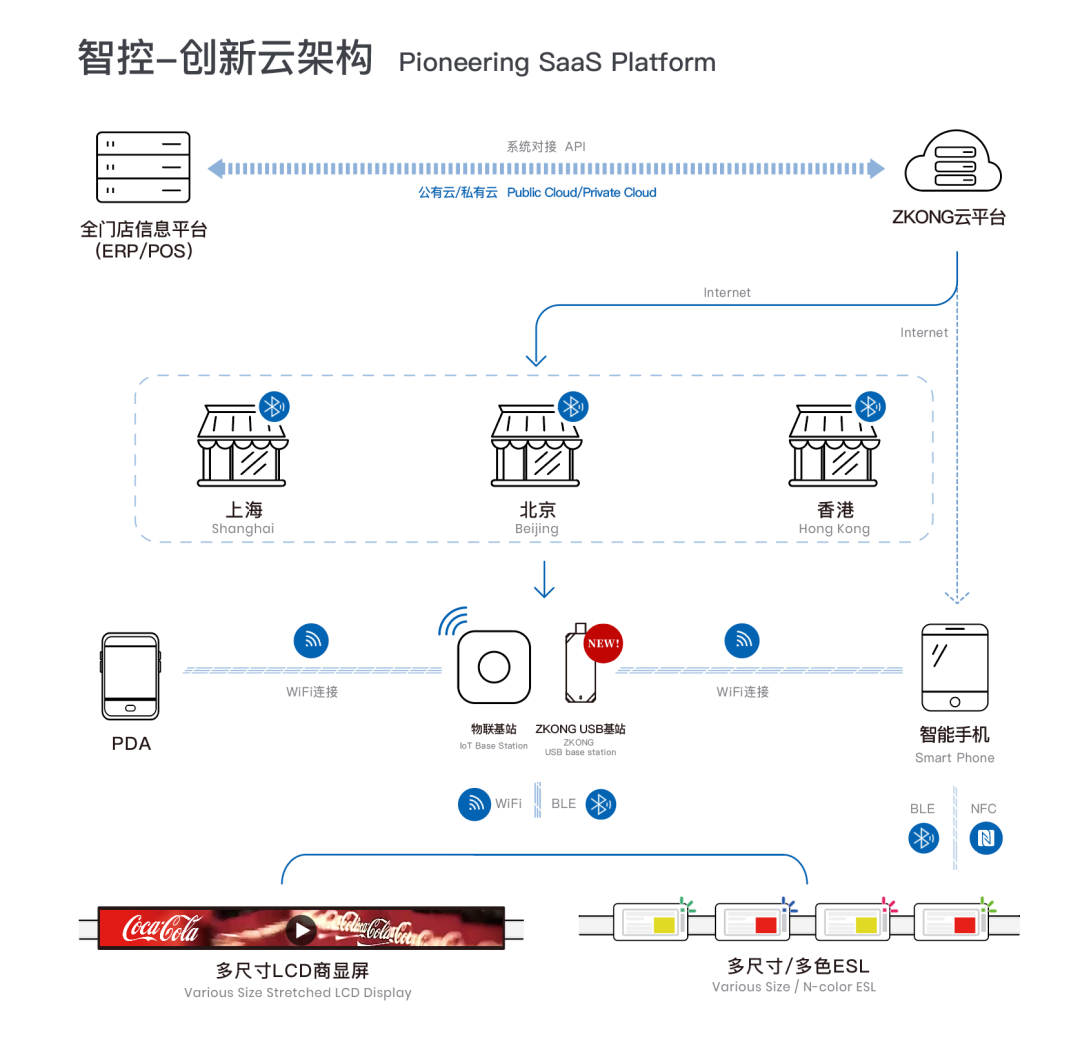
智控云平台与门店基站部署架构示意
但传统基站依赖独立布线与 PoE 供电,每次部署都意味着额外的网络改造与硬件投入。在小店补点或多门店大规模复制场景中,这一模式带来的高成本与长周期,逐渐成为物联能力规模化落地的主要阻力。
针对这一问题,智控推出 USB 价签基站融合部署方案 ZAP-U。不同于传统 PoE 供电模式,ZAP-U 可直接接入企业级 AP 的 USB 接口取电,并作为 AP 外设直接融入现有无线网络体系,无需新增网线、无需占用交换机端口,也无需额外增加独立供电设备。
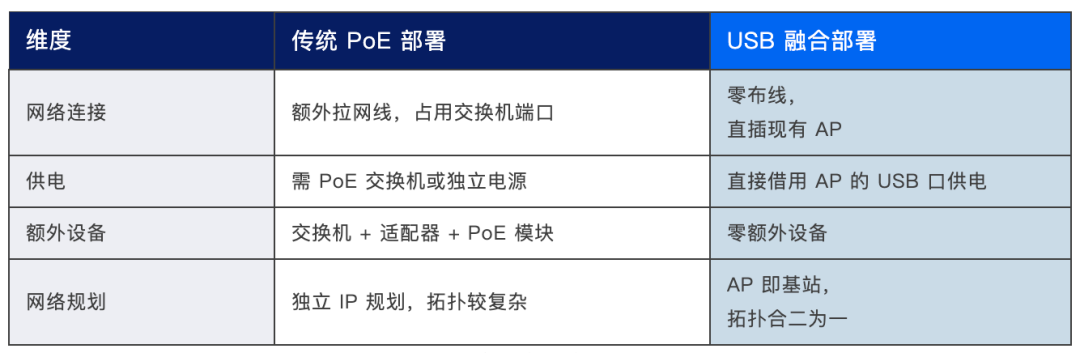
部署方式对比
在产品形态上,ZAP-U 同样延续了这一轻量化思路:
-
支持热插拔—— 即插即用,无需重启设备,维护更便捷
-
灵活安装—— 小巧轻便,可 USB 直插使用,安装方式灵活多样
-
单店单设备——一台设备即可覆盖单店所需,降低部署成本
-
开放协议接口——提供标准接口与开放协议,快速对接现有系统
对于已经部署成熟无线网络体系的连锁门店来说,无论是新店开业还是存量门店补点,这种“接入即用”的方式,都能让蓝牙物联能力快速落地,而无需反复进行网络改造与施工部署。

以单店部署两台智控 USB 价签基站为例,综合考虑布线、供电及人工施工成本,整体部署成本相比传统方案可降低约 73%,同时减少对正常营业环境的影响。
典型应用场景:
门店改造与规模复制
相比传统独立部署模式,USB 融合部署更适合轻量级接入需求,以下场景尤为适用:
-
已完成 WiFi 覆盖、需要补充蓝牙物联能力的办公场景
-
已经营业、不适合施工改造的存量门店
-
需要快速复制部署的连锁零售体系

某连锁超市在推进全国门店改造时,正是借助已有的无线厂商AP 系统,通过 USB 基站接入快速上线智控电子价签,避免了二次施工停业。
对于这些场景而言,"不改变现有网络结构"本身,就意味着更低的实施门槛与更高的落地效率。
打造多形态基站部署体系
从无线蓝牙基站ZAP-C 到蓝牙AOA定位基站,再到 USB价签基站ZAP-U,智控的基站产品体系已覆盖标准部署、精准定位以及轻量化接入等不同场景,可针对新建项目与存量改造需求提供更加灵活的基站部署方案。
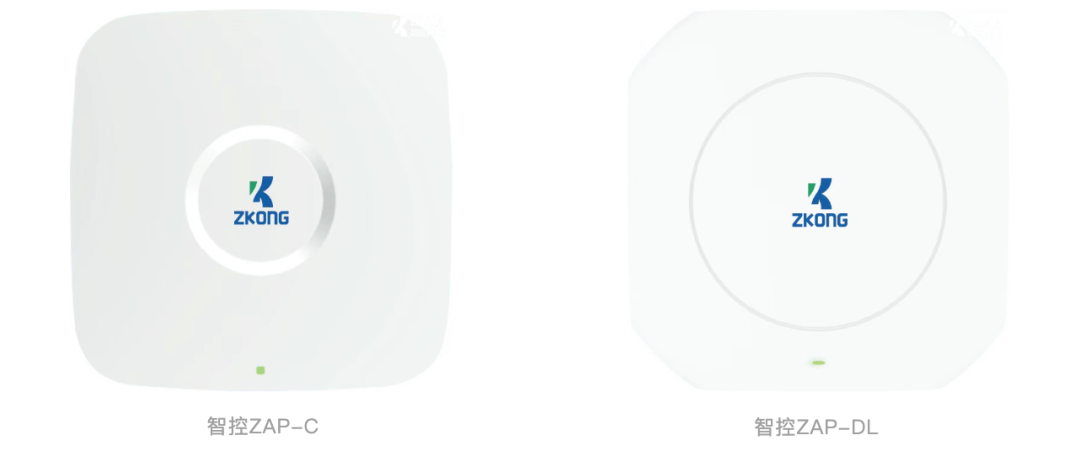
基于对现有无线网络环境的深度适配,智控ZAP-U 的应用边界也正进一步延伸至仓储、医疗等多元领域。
未来,智控也将持续推进与更多主流网络生态的兼容建设,不断完善软硬件融合物联能力,为更多行业场景提供更加高效、灵活的数字化连接方案。
For establishments that have already completed WiFi coverage, the deployment of electronic price tags no longer requires re-wiring or additional construction.
The intelligent control USB price tag base station is compatible with mainstream brand enterprise-level AP devices and can be directly connected to the existing wireless network. This eliminates the need for business interruption and construction, allowing for a rapid deployment of Bluetooth IoT applications such as electronic price tags, indoor positioning, and asset tracking, further reducing renovation and deployment costs.
Reusing the network to lower deployment costs
As more and more stores enter the phase of renovating existing infrastructure, the challenge of expanding Bluetooth IoT capabilities without disrupting normal operations has become a practical issue for businesses.
When a store plans to install electronic price tags, it typically needs to deploy a price tag base station within the store to connect to the cloud platform and the electronic price tags on the shelves. The base station uses wireless Bluetooth signals to synchronize information such as prices, promotions, and inventory to each price tag, enabling real-time updates of product information.
Schematic of the intelligent control cloud platform and store base station deployment architecture
However, traditional base stations rely on independent wiring and PoE power supply. Each deployment involves additional network renovations and hardware investments. In scenarios involving small-store补点 (adding points) or large-scale replication across multiple stores, the resulting high costs and long lead times have increasingly become the main obstacles to scaling IoT capabilities.
To address this issue, ZKONG has introduced the USB price tag base station fusion deployment solution, ZAP-U. Unlike traditional PoE power supply modes, ZAP-U can be connected directly to the USB port of an enterprise-level AP to obtain power. It integrates into the existing wireless network system as an AP peripheral, removing the need for additional network cables, switch port occupation, or separate power supplies.
Comparison of deployment methods
In terms of product form, ZAP-U also follows a lightweight approach: - Supports hot-swapping: Plug-and-play operation without restarting the device, making maintenance more convenient. - Flexible installation: Compact and lightweight, suitable for direct USB insertion with various mounting options. - Single-store, single-device: One device is sufficient to cover the needs of a single store, reducing deployment costs. - Open protocol interfaces: Provides standard interfaces and open protocols for quick integration with existing systems. For chain stores with established wireless networks, this "plug-and-play" approach allows Bluetooth IoT capabilities to be deployed quickly, whether for new store openings or renovations of existing stores, without requiring repeated network modifications or construction.
Taking the deployment of two ZKONG USB price tag base stations in a single store as an example, the total deployment cost can be reduced by approximately 73% compared to traditional methods when accounting for wiring, power supply, and labor costs. This also minimizes the impact on normal business operations.
Typical application scenarios: - Store renovation and scale replication: USB fusion deployment is better suited for lightweight access needs compared to traditional independent deployment. It is particularly applicable in office environments that have already achieved WiFi coverage and require supplementary Bluetooth IoT capabilities, existing stores where construction is not feasible due to ongoing operations, and retail systems requiring rapid deployment replication. - A chain grocery store successfully rolled out the ZKONG electronic price tag system across its national network by utilizing the existing wireless AP system and connecting via USB base stations, thereby avoiding the need for secondary construction and store closures.
For these scenarios, the ability to add features "without changing the existing network structure" significantly lowers the implementation threshold and increases operational efficiency.
Driven by deep adaptation to existing wireless network environments, the application boundaries of ZKONG ZAP-U are expanding into sectors such as warehousing and healthcare. In the future, ZKONG will continue to advance compatibility with mainstream network ecosystems and refine its hardware-software fusion IoT capabilities to offer more efficient and flexible digital connectivity solutions across various industries.
Store Renovation and Scale Replication
Compared with the traditional independent deployment model, USB integrated deployment is more suitable for lightweight access needs. The following scenarios are particularly applicable:
Office scenarios where Wi-Fi coverage has already been completed and Bluetooth IoT capabilities need to be supplemented
Existing stores that are already open and not suitable for construction remodeling
Chain retail systems that require rapid replication and deployment
When a chain supermarket promoted nationwide store renovation, it was precisely by leveraging the existing wireless manufacturer's AP system to quickly launch smart electronic price tags via USB base station access, avoiding secondary construction and downtime.
For these scenarios, the fact that “existing network structure is not changed” itself implies lower implementation thresholds and higher deployment efficiency.
Building a Multi-Form Base Station Deployment System
From the wireless Bluetooth base station ZAP-C to the Bluetooth AOA positioning base station, and then to the USB price tag base station ZAP-U, Zhikong's base station product system has covered standard deployment, precision positioning, and lightweight access for different scenarios, providing more flexible base station deployment solutions for new projects and existing remodel requirements.
Based on deep adaptation to the existing wireless network environment, the application boundaries of Zhikong ZAP-U are further extending into warehousing, medical care, and other diverse fields.
In the future, Zhikong will continue to promote compatibility construction with more mainstream network ecosystems, continuously improve software-hardware integrated IoT capabilities, and provide more efficient and flexible digital connection solutions for more industry scenarios.
原文链接: https://mp.weixin.qq.com/s/YnDDzY46bnELBzf1r7dgJA