

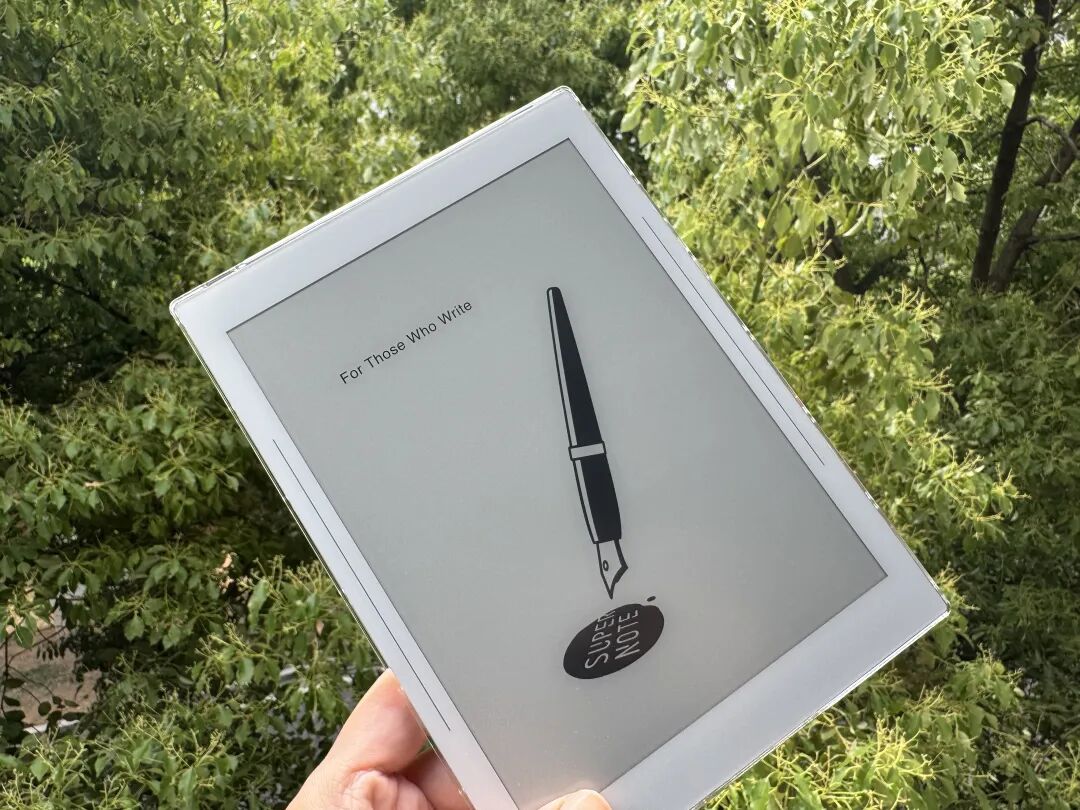
-
如果你买墨水屏只为阅读,划走,不浪费你时间。 -
如果阅读和手写五五开,也不用往下读,它不适合你。 -
如果你的比例已经倒向4:6,可以停一下。 -
如果是3:7、2:8,甚至几乎纯手写——这篇文章就是为你写的。

-
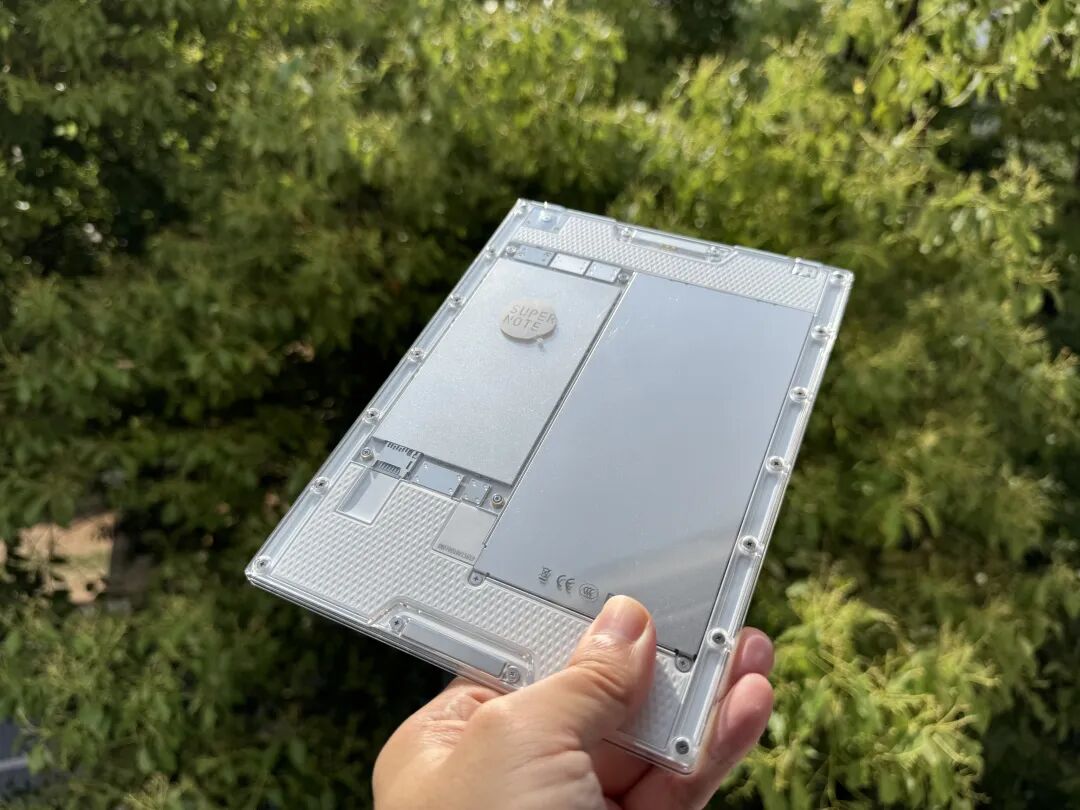
工业设计:Nomad的白色版和透明版都按用户可维修的思路设计,电池、主板、microSD卡都可以自行更换。 -
模块化组装:包装里直接附送螺丝刀,拧开后盖、拔掉排线就能进入内部。 -
可玩性:自换电池、自升主板,玩家友好度拉满。
-
小资,有点钱 -
有主见,明确知道自己要什么 -
不在乎别人的看法 -
内心丰盈,对世界有自己的判断 -
对自己的生活节奏有完整把控
Nomad(A6X2,7.8英寸):300PPI,无前光,RK3566处理器,4+32GB存储,最高扩展至2TB,安卓11封闭系统,重266克,2700毫安电池。
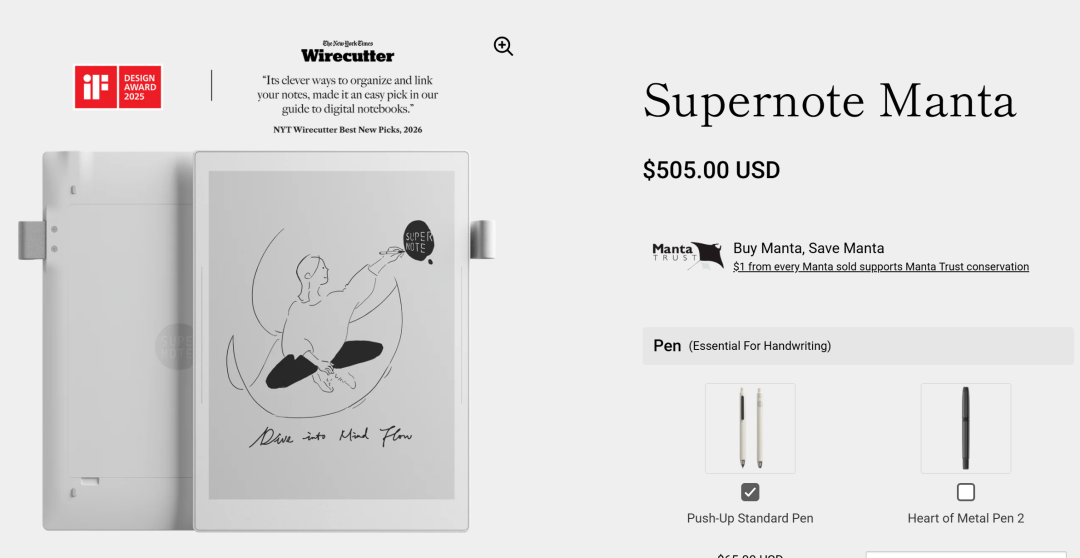
Manta(A5 X2,10.7英寸):柔性屏,Carta 1300,300PPI,无前光,RK3566处理器,4+32GB存储,最高扩展至2TB,安卓11封闭系统,3600mAh电池,机身最厚处6.0mm、最薄边缘3.6mm,重375克。
-
要便携、外出带,选7.8英寸的Nomad; -
大多数时间放固定工位上写,毫无悬念选10.7英寸的Manta。
我同时也想起一句话:这世上不是所有东西都需要打败别人,也可以只忠于它自己。
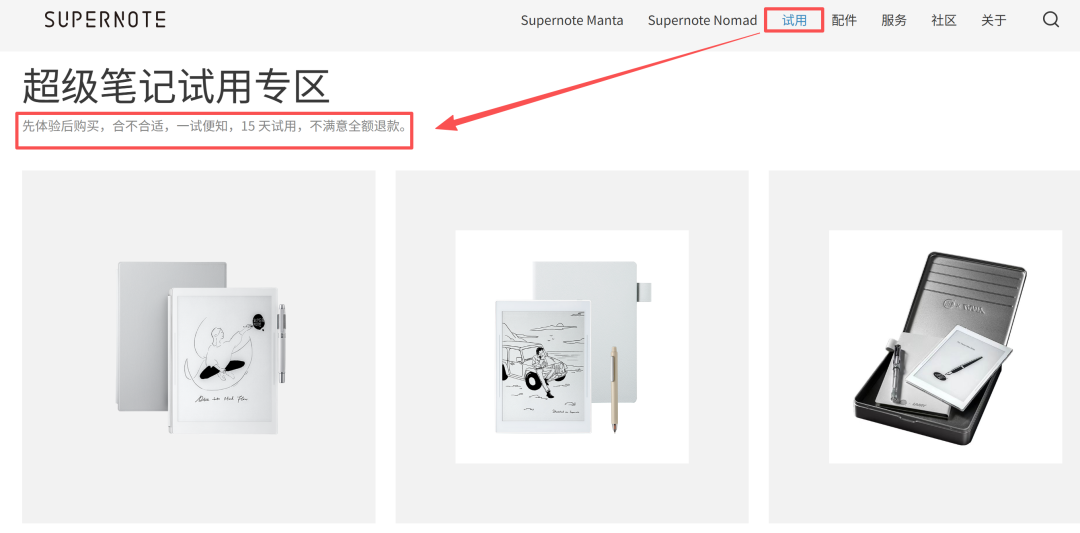
There's an e-ink device that explicitly states "no seven-day no-reason returns"—and it sells well.
Supernote.
In the e-ink hierarchy of disdain, it's an outlier: no benchmark wars, no color screen competitions, no price-cutting battles, and apparently too lazy to market domestically. (I asked the flagship store—zero discounts for 618, only targeted subsidies for select buyers.)
I've been around e-ink long enough that this was the last brand I came across—by the vibes of its era, I wasn't even their target audience.
So this article starts with a filter:
If you buy e-ink solely for reading, scroll away. I won't waste your time.
If reading and writing are fifty-fifty, keep scrolling—it's not for you.
If your ratio tilts 4:6, you can stop here.
If it's 3:7, 2:8, or nearly pure handwriting—this article is written for you.
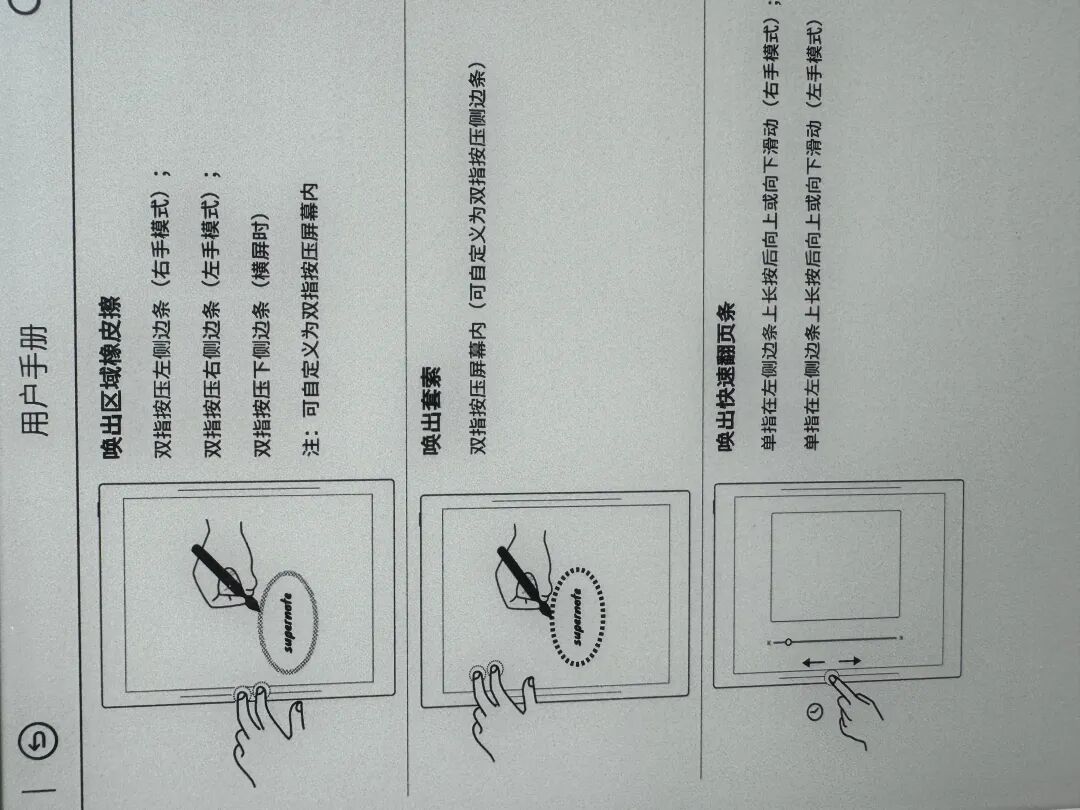
The only e-ink device that made me properly crack open the user manual.
Without it, you genuinely can't learn the thing.
The built-in manual, pages 55 through 128, demands slow and careful reading.
Among e-ink devices, it has the steepest learning curve. But this interaction logic mirrors the firmware flashing I walked you through the other day: learn it once, use it forever.
Think of a lifelong Windows user switching to a MacBook for the first time—trackpad gestures, system shortcuts, all muscle memory gets rewritten. Get past those few days and the mouse feels redundant; Mac's interaction becomes a whole tier above Windows.
Supernote follows the exact same curve.
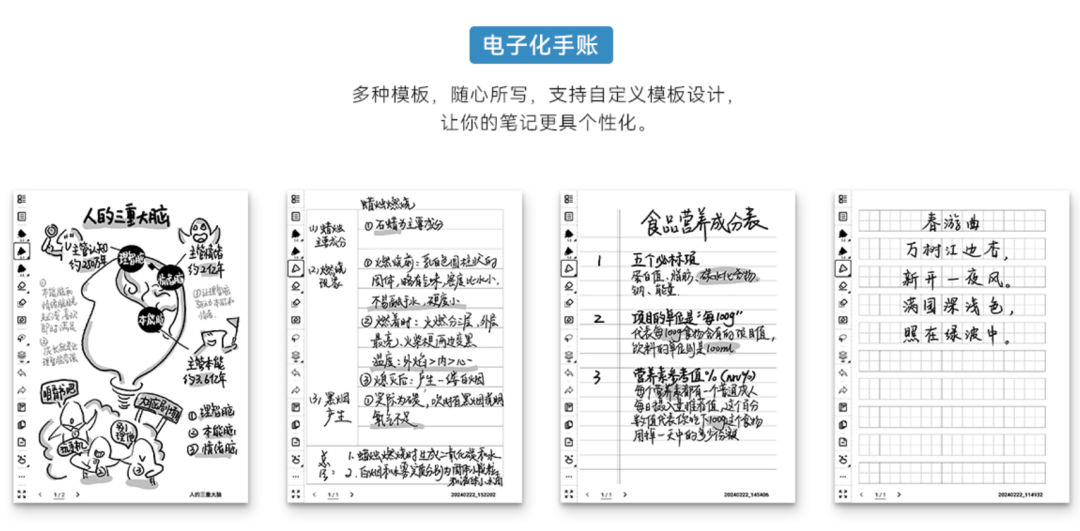
All chips bet on writing.
Supernote's product philosophy is unusually pure and wraps into three lines:
1. Core positioning: the entire system and interface orbit around writing; reading is secondary.
2. Closed system: pre-loaded with a handful of customized apps like WeChat Read to accommodate the domestic market.
3. Performance orientation: single-function by design, can't match all-round machines on aggregate specs, but it drives writing to the extreme.
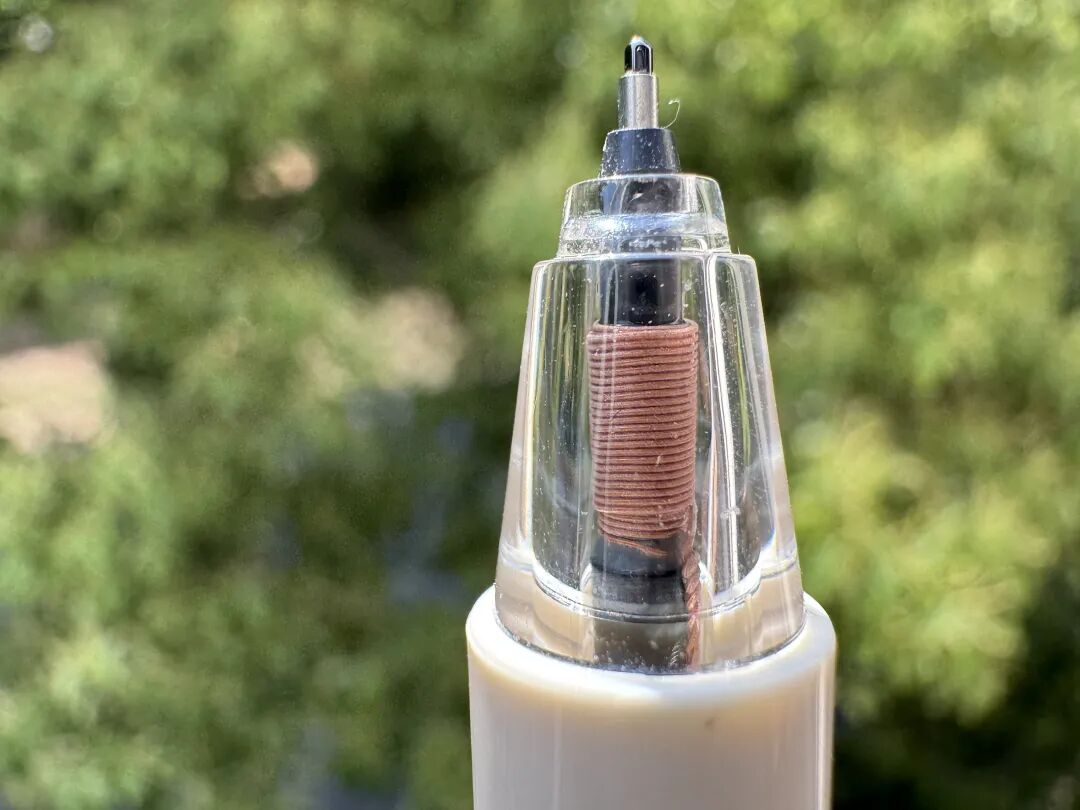
The highlight is the stylus.
The ceramic tip doesn't wear down like those on the reMarkable Paper Pro and Kindle Scribe—in theory, you never replace it.
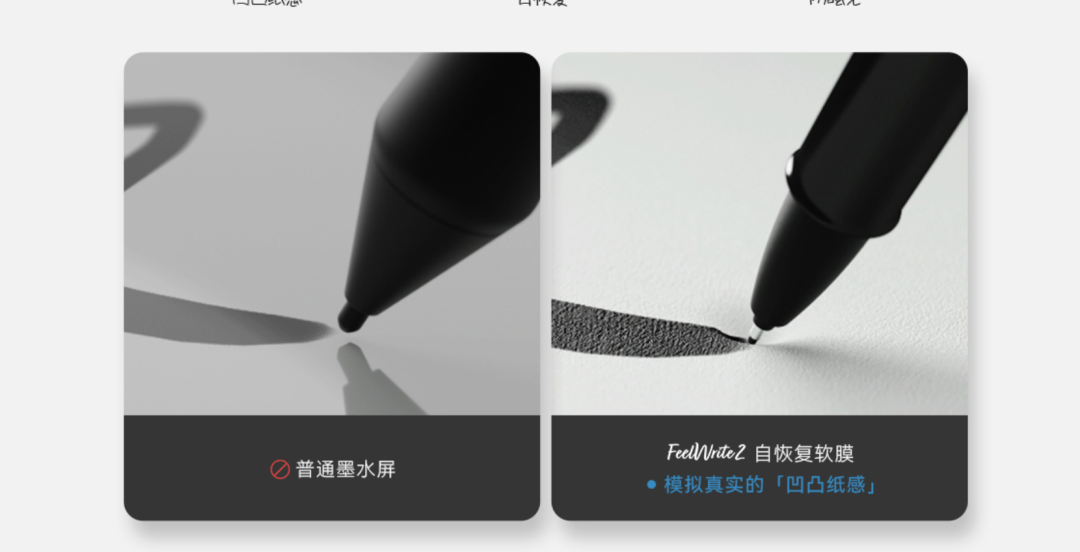
The cost is the FeelWrite 2 soft film making the screen look slightly gray, less transparent than glass or acrylic. It's a technical trade-off: you give up clarity for feel.
Modular, anti-consumerist design.
I asked Supernote support on a forum why hardware iterations crawl. Their answer: the Nomad was built from scratch on a custom kit mindset.
Industrial design: both the white and transparent Nomad editions are designed around user repairability—battery, motherboard, and microSD card are all user-replaceable.
Modular assembly: the box includes a screwdriver. Unscrew the back cover, pop the ribbon cable, and you're inside.
Play value: swap your own battery, upgrade your own motherboard—player-friendly rating maxed out.
When future upgrade kits arrive, the motherboard, battery, and screen can be swapped individually; replacing parts alone gets you close to a fresh-machine experience.
All the modules you're looking at now are detachable and replaceable in the future. (The swappable motherboard in particular means: the day you feel the performance lagging, you only pay for the motherboard and the whole device jumps up a notch.)
In an e-ink industry that pushes one generation and kills another on a regular schedule, that approach is remarkably gutsy.
The main battlefield isn't domestic.
Supernote keeps marketing in China very restrained, and I rarely discuss it in my past reviews.
Glance at the user manual and you'll guess why—the real markets are Europe, America, and neighboring Japan.
Chinese users certainly have customized needs around notes and planners, but the overall atmosphere here is worlds apart from overseas.
The A5 X2 Manta retails for $500 overseas without bundle accessories (stylus and case sold separately). Compared with the $399 16 GB Kindle Scribe and the reMarkable, it's pricier—and that price point simply isn't aimed at China's cost-performance logic.
It's almost disdainful of marketing.
Reach a certain stage, a certain class, a certain pace of life, and you'll naturally encounter it.
This brand grows by word of mouth.
Its typical user profile is equally crisp:
Petty bourgeois with disposable income.
Opinionated, knows exactly what they want.
Indifferent to other people's judgments.
Innerly rich, with their own read on the world.
In full command of their own life rhythm.
So—if your shopping habits run left toward spec sheets and right toward benchmark scores, the whole "prove it with a run test" routine, this brand truly isn't your cup of tea, and it doesn't want yours either.
The only player in the entire e-ink industry brave enough to print "no seven-day no-reason returns" in bold. Black-and-white on the sales page, a self-filter for users.
But it's hardly arrogant. The tone leans corporate-Western, similar to the overseas reMarkable.
The official site offers a fifteen-day trial. If it doesn't fit, return it as-is, zero hassle. Use it first, decide later whether to keep it.
7.8-inch or 10.7-inch?
Supernote is only expensive overseas. Its domestic pricing, I think, is reasonable.
Two active sizes right now:
Nomad (A6X2, 7.8-inch): 300 PPI, no front light, RK3566 processor, 4+32 GB, expandable to 2 TB, Android 11 closed system, 266 g, 2700 mAh battery.
Manta (A5 X2, 10.7-inch): flexible panel, Carta 1300, 300 PPI, no front light, RK3566 processor, 4+32 GB, expandable to 2 TB, Android 11 closed system, 3600 mAh battery, thickest point 6.0 mm, thinnest edge 3.6 mm, 375 g.
The selection logic is dead simple:
Portable and take-it-out? Go 7.8-inch Nomad.
Mostly writing at a fixed desk? Choose the 10.7-inch Manta without hesitation.
That visual breathing room and writing real estate a big screen provides is impossible on a small one.
And by the way, the relaxed, slightly bourgeois aura this device carries into Starbucks feels completely at home.
It also calls to mind a line: not everything in this world needs to beat the competition; it can simply stay true to itself.
Original link: https://mp.weixin.qq.com/s/8tMGNKTIk1uq258f3MBDwg