
原文链接|https://www.businessinsider.tw/article/2455
编者按|陈仰圣,朋友叫他熊哥,五十多岁,创业超过 20 年。「Bearboss 熊老板」创办人,也是「想不同国际」、「首邑电商顾问」与「睿识投资控股」的共同创办人,专注电子阅读器代理与电商通路超过 10 年。他的另一个身份是部落客,偶尔客串顾问与讲师。用他自己的话说,是「专职老板、兼职什么都做」。本文根据访谈内容,经修改整理。
从三创最偏的角落,做到年营收 3 亿
2019 年,陈仰圣带着台湾九成人都不认识的电子阅读器,在三创最偏的角落摆下一张桌子。同事反对,消费者陌生,开张第一天只卖出一台。
五年后,公司年营收从 5 千万做到 3.2 亿,七成业绩来自这个当初无人问津的品类,Bearboss 熊老板也稳坐台湾电子书阅读器零售龙头。

壹|20 几万的电检费,换一个看不见的未来
2019 年,我花了 20 几万台币,请台湾实验室帮三台机器做 NCC 电检。
那三台是文石(Boox)的测试机,7.8 吋、10.3 吋、13.3 吋各一台。当时我心里很清楚,第一批货大概不到 50 台,初期根本连电检费都赚不回来。
但我还是做了。
Bearboss 熊老板是 2004 年我创立的,一开始就是卖电脑周边——电脑包、配件、各种 3C 小东西,这条路走了十几年。公司一直在,客人一直有。到 2019 年,公司撑了 15 年,但业绩不上不下,就卡在那个看不到的天花板。
配件生意有它的上限,就算毛利再好,单价低,整体业绩就是冲不上去。我那时候甚至动过念头,要不要把公司收掉算了。
就在这个时间点,我在上海工作的那两年派上了用场。我第一次接触到文石阅读器,看到台湾没有人在做实体体验通路,看到一个缺口。
我决定要引进电子阅读器。
全体同事——包括跟了我最久的资深干部——全部反对。理由很实际:过去卖配件,客人看到长怎样就是怎样,不需要解释太多。但卖主机要跟客人说明操作系统、硬件规格、还要回答「我的书从哪里来」,员工怕自己没有能力应付。毛利又比配件差,推起来还特别费力。
我听完,没有改变主意。
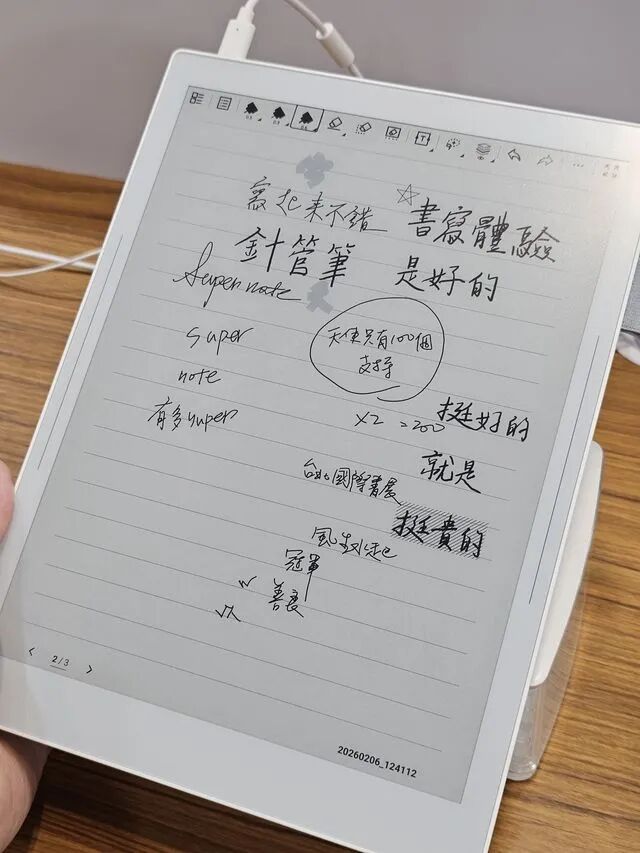
電子書閱讀器已經從單純的閱讀載體,成為筆記及會議記錄的周邊設備。|Photo Credit:Webber Lo 羅弘旭
贰|一张桌子,三台机器,一个客人
2019 年三创改装,我们从二楼被挪到三楼的边角位置。
重新开幕那天,现场就是一张桌子,三台机器。没有展示架,没有背板,没有任何会让人多看一眼的东西。同事站在旁边,没有一个人知道该怎么开口。
但人还是会走过来。他们停下来,歪着头看那个黑白屏幕,然后问出几乎每个人都会问的第一句话:
「这跟 iPad 差不多价格,又是黑白的,为什么不买 iPad 就好?」
我就站出来解释。iPad 是全方位的工具,这没有错。但你把阅读和笔记这两件事单独抽出来,iPad 的直射光线长时间看下去,眼睛会非常吃力。电子纸不一样,它不发光,靠自然光反射,护眼是它唯一无法被取代的地方。
客人点头,然后问:「那我的书从哪里来?」
我再解释。可以放自己的 PDF 文件,可以下载各大书城的 APP 买书。说完这些,有人继续听,有人转身走了。
整个上午,没有卖出去一台。
我没有离开那张桌子。我心里只有一个念头——我要证明给同事看:
这台一万多的东西,它是可以卖的。不是靠广告,不是靠摆在那里等人买,是靠站在这里,一个一个说清楚。
下午,第一台卖出去了。那天从开门到关门,只有这一位客人买单,他姓李。到现在我们还有联系。
那天结束,我知道这条路走得通。
叁|疫情来了,营收从 100 万掉到 15 万
2020 年疫情来的时候,我们通路月营收从 100 万掉到 15 万。
不是生意变差,是人直接消失了。实体门市没有人流,电话也不响,就这样撑着。我身边很多做实体通路的朋友,那段时间都在想同一件事:要不要先把店收了。
那段时间我也想过,如果当初 2019 年没有坚持引进阅读器,我们大概撑不过疫情。配件的生意本来就卡在天花板,再被疫情这样打,早就收掉了。是阅读器,让公司还有一口气在。
但有一口气在,不代表可以就这样等。
我反而去找了 Kobo、Readmoo、HyRead 谈合作。
当时很多人觉得这个决定很奇怪,疫情还没结束,你去扩品牌线做什么?但我的逻辑很简单——大家关在家里,长时间盯着手机和电脑,眼睛很累,需要一个不伤眼的阅读方式。这个需求不是疫情制造出来的,是一直都在那里,只是疫情把它放大了。
问题是你接不接得住。
我们很早就把网站的信息流跟门市的体验结合在一起,这是我过去在 eBay、雅虎、联想电商做数字零售的底子。线下没有人,线上的询问度反而爆发了,过去接触过我们信息的客人,开始在网络上回流购买。多品牌的布局也在这个时候发酵——消费者在网络上搜寻,发现要买阅读器,选择最多的地方是熊老板。
疫情三年,我们电子阅读器的业绩平均每年成长超过 50%。
公司的年营收从 2019 年的 5 千万,到 2024 年成长到 3.2 亿,其中 70% 来自电子阅读器。
这个数字我说出来,自己有时候也觉得不真实。但我知道它怎么来的——
是 2019 年那批不到 50 台的第一批货;是那 20 几万的电检费;是同事全部反对的时候我没有改变主意;是疫情最惨的时候我没有把店收掉。
你没有在那个时刻坚持下去,天上掉下来的机会你也接不住。
 Bearboss 熊老闆創辦人陳仰聖,靠著電子閱讀器,讓公司從電腦配件通路轉為電子閱讀器最大通路商,年營收破三億台幣。|Photo Credit:Webber Lo 羅弘旭
肆|「没想到台湾这么多人愿意花钱买书」
有一次,当我看到全年销售数字的时候,我发现我们不是小虾米。
台湾顶多等同于一个上海市,但台湾展现出来的消费力,远超过原厂的预期。今年书展,中国科大讯飞特地从合肥派了四个人来台湾参展,跟我聊完之后,其中一个人忍不住说:
「没有想到在台湾有这么多人愿意花钱买书。」
他说这句话的语气,我印象很深。不是羡慕,是真的不理解。
因为中国早期的电子书市场,主要是靠免费网络小说在撑,硬件只是个便宜的载具。但台湾不一样——这里有一群人,真的在认真买书、认真读书。还有一群人,每年只要出新规格的阅读器,旧机器还没坏也要换,就像追 Android 手机一样追阅读器。
这是台湾市场最容易被低估、也最值得认真做的地方。
伍|通路的核心竞争力,只有一件事
这几年很多人来问我:你为什么会看好电子阅读器这个市场?
我的答案都一样——看你怎么定义这个市场。
如果你把它当平板的替代品来卖,它永远是小众。但如果你把阅读和笔记这两件事单独抽出来,它就是一个没有对手的产品。iPad 在那个位置上完全没有优势,这不是规格问题,是使用情境的问题。
台湾这个市场被很多人低估过。原厂低估过,竞争对手低估过,连我自己当初也没有想到能做到这个规模。但数字不会说谎——从 5 千万到 3.2 亿,靠的不是运气,是每一个站在门市里亲手把机器递给客人的时刻累积出来的。
我常说,通路的核心竞争力只有一件事:
你有没有办法让客人在买之前,就相信这个产品。
广告做不到这件事,上架做不到,只有体验做得到。
这是我们从一张桌子做起来的原因,也是我们现在还在做的原因。
Original link | https://www.businessinsider.tw/article/2455
Editor's note | Chen Yang-sheng, known as Bear Boss by friends, is in his 50s and has been an entrepreneur for over 20 years. He is the co-founder of Bearboss, XiangButong International, Shouyi E-Commerce Consulting, and Ruishi Investment Holdings, with over 10 years of expertise in e-reader distribution and e-commerce channels. He is also a blogger who occasionally works as a consultant and lecturer. In his own words, he is a "full-time boss, part-time doing everything." This article is based on an interview and has been edited.
From the most remote corner of Sanxia Creative Park to NT$300 million in annual revenue
In 2019, Chen Yang-sheng set up a table in the most remote corner of Sanxia Creative Park, bringing e-readers to Taiwan — a device that eight out of ten Taiwanese had never heard of. Colleagues opposed the move, consumers were unfamiliar, and only one unit was sold on opening day.
Five years later, the company's annual revenue grew from NT$50 million to NT$320 million, with 70% of sales coming from the once-ignored category. Bearboss has firmly established itself as Taiwan's leading e-reader retailer.
"Bearboss" has become Taiwan's No.1 e-reader retail brand after five years of operation. | Photo Credit: Webber Lo Luo Hong-xu
Part 1 | The NT$200,000+ certification fee for an invisible future
In 2019, I spent over NT$200,000 on NCC electrical testing for three machines at a Taiwanese lab.
Those three were Boox demo units — a 7.8-inch, a 10.3-inch, and a 13.3-inch model. I knew clearly at the time that the first batch would be fewer than 50 units, and in the early stage, the certification cost alone could not be recouped.
But I did it anyway.
Bearboss was founded in 2004, starting with computer accessories — laptop bags, peripherals, and various 3C gadgets. That path ran for over a decade. The company survived and customers kept coming. By 2019, after 15 years, performance was stagnant, stuck at an invisible ceiling.
Accessory business has its limits. Even with good margins, the low unit price meant overall revenue could never break through. At that time, I even considered shutting the company down.
Then my two years working in Shanghai came in handy. I first encountered Boox e-readers there and saw that no one in Taiwan was running a physical experiential channel — there was a gap.
I decided to bring in e-readers.
Every colleague — including my most senior managers who had followed me the longest — opposed it. Their reasoning was practical: when we sold accessories, customers could see exactly what they were getting and required little explanation. But selling e-readers meant explaining operating systems, hardware specs, and answering "where do I get my books?" Staff feared they couldn't handle it. Margins were also thinner than accessories, making it a tough sell.
I listened, and I did not change my mind.
E-reader devices have evolved from simple reading platforms into peripherals for note-taking and meeting records. | Photo Credit: Webber Lo Luo Hong-xu
Part 2 | A table, three machines, one customer
During the 2019 renovation of Sanxia Creative Park, we were relocated from the second floor to a corner on the third floor.
On reopening day, there was just a single table and three machines. No display stands, no backdrop panels — nothing that would make anyone pause and look. My staff stood beside me; none of them knew how to start a pitch.
But people still walked over. They would stop, tilt their heads to study the black-and-white screen, and ask the question almost everyone asked first:
"It's about the same price as an iPad, and it's black and white — why not just buy an iPad?"
I stepped forward to explain. It's true that the iPad is an all-around tool. But if you look specifically at reading and note-taking, staring at the iPad's direct-emission light for extended periods strains the eyes. E-ink is different—it doesn't emit light but relies on ambient light reflection, and eye comfort is the one feature that simply cannot be replaced.
Customers would nod, then ask: "So where do I get my books?"
I'd explain again. You can load your own PDFs, or download apps from major bookstores to buy ebooks. After that, some would keep listening; others would turn and leave.
Not a single unit was sold all morning.
I did not leave that table. My only thought was — I needed to prove to my colleagues:
This machine, costing over NT$10,000, can actually sell. Not through advertising, not by just sitting there waiting. It sells by standing right here and explaining it to each person individually.
In the afternoon, the first unit was sold. That entire day, only one customer made a purchase — a Mr. Li. We're still in touch to this day.
When that day ended, I knew this path would work.
Part 3 | When the pandemic hit, revenue dropped from NT$1 million to NT$150,000
In 2020, when the pandemic hit, our channel's monthly revenue dropped from NT$1 million to NT$150,000.
It wasn't that business got worse — people simply disappeared. Physical stores had no foot traffic, the phones stayed silent, and we just held on. Many of my friends running physical channels were asking the same thing back then: should we close shop first?
I thought about it too. If I hadn't insisted on bringing in e-readers in 2019, we likely wouldn't have survived the pandemic. Accessory business was already capped at that ceiling, and the pandemic blow would have finished us. It was the e-reader that kept the company alive.
But staying alive does not mean sitting around waiting.
Instead, I went to Kobo, Readmoo, and HyRead to discuss partnerships.
Many people found that decision strange at the time — the pandemic was still ongoing, why expand your brand lineup? But my logic was simple: everyone was locked at home, staring at phones and computers all day, their eyes exhausted, needing an eye-friendly way to read. That demand wasn't created by the pandemic — it was always there, just amplified.
The question was whether you could capture it.
We had long integrated our website content flow with in-store experience, drawing on my background in digital retail from eBay, Yahoo, and Lenovo. With no foot traffic offline, online inquiries exploded. Customers who had previously encountered our information began returning to purchase online. The multi-brand strategy also took hold at that moment — when consumers searched online for an e-reader, Bearboss appeared as the store with the widest selection.
Over the three pandemic years, our e-reader revenue grew by over 50% per year on average.
The company's annual revenue rose from NT$50 million in 2019 to NT$320 million in 2024, with 70% coming from e-readers.
Sometimes when I say this number, it feels unreal to me as well. But I know how it was built:
It was that first batch of fewer than 50 units in 2019; the NT$200,000+ certification fee; not changing my mind when every colleague opposed it; keeping the store open through the worst days of the pandemic.
If you don't hold on at that moment, even an opportunity falling from the sky won't be caught.
Bearboss founder Chen Yang-sheng transformed the company from a computer accessories channel into Taiwan's largest e-reader distributor, achieving over NT$300 million in annual revenue. | Photo Credit: Webber Lo Luo Hong-xu
Part 4 | "I didn't expect so many people in Taiwan would spend money on books"
One time, when I looked at the full-year sales figures, I realized we are not a small player.
Taiwan is roughly equivalent in size to a city like Shanghai, but Taiwan's consumer power far exceeds what manufacturers originally expected. During this year's book fair, iFlytek from Hefei sent four people to Taiwan specifically. After chatting with me, one of them blurted out:
"I didn't expect so many people in Taiwan would be willing to spend money buying books."
The tone of that sentence is something I'll remember. It wasn't envy — it was genuine incomprehension.
Because China's early ebook market was primarily sustained by free web novels, with hardware serving as merely a cheap carrier. Taiwan is different — here is a group of people who truly buy books seriously and read seriously. And there's another group who replace their e-readers the moment a new model is released, even if their old one isn't broken, much like chasing the latest Android phone.
This is the most underestimated yet most rewarding aspect of the Taiwan market.
Part 5 | There is only one core competency in distribution
In recent years, many people have asked me: Why are you bullish on the e-reader market?
My answer is always the same — it depends on how you define the market.
If you position it as a tablet replacement, it will always be niche. But if you isolate reading and note-taking as standalone use cases, it becomes a product with no competition. The iPad has zero advantage in that position — this isn't a spec issue, it's a usage scenario issue.
The Taiwan market has been underestimated by many. Manufacturers underestimated it, competitors underestimated it, and I myself didn't expect to reach this scale either. But numbers don't lie — from NT$50 million to NT$320 million, this wasn't luck. It was accumulated from every moment of standing behind the counter, personally handing the device to a customer.
I often say there is only one thing that defines a distributor's core competency:
Can you make the customer believe in the product before they buy it?
Advertising cannot do this. Listing it on a shelf cannot. Only experience can.
That is why we started from a single table, and that is why we are still going at it today.