
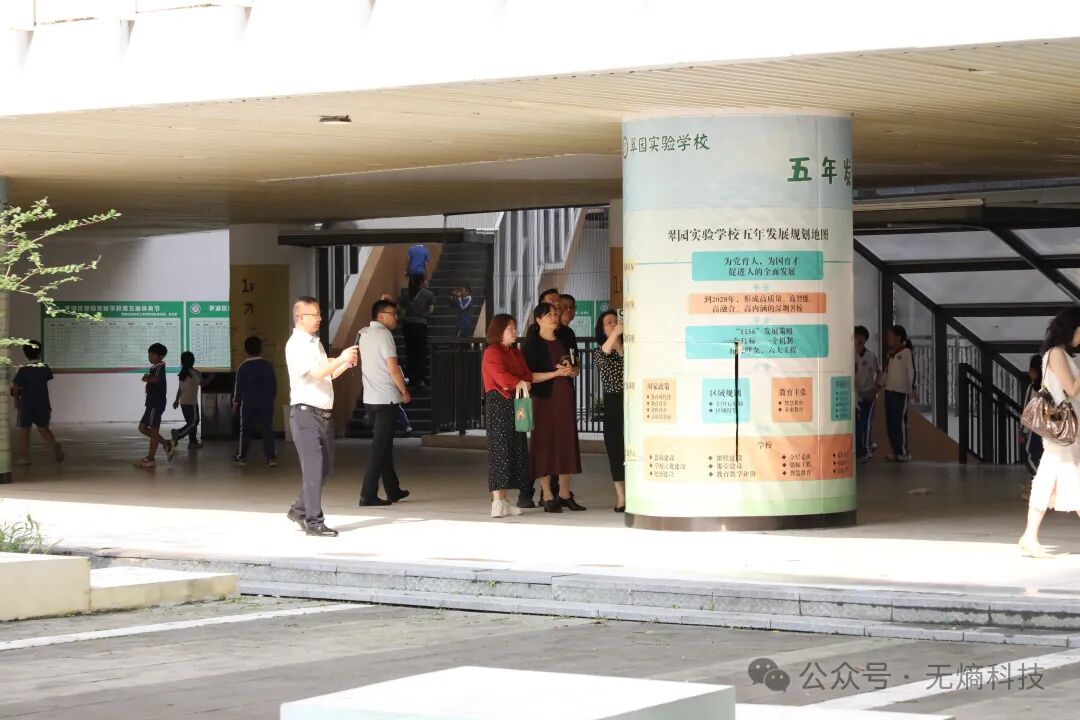
3月30日,深圳翠园实验学校迎来了一场跨越千里的教育对话——来自四川、广东两地的近30位名校校长、教育专家、行业协会负责人齐聚一堂,共同探讨“人工智能+电子纸技术如何真正赋能精准教学”。从理论到实践,从课堂到校园,这场闭门论坛用真实数据和鲜活案例,为教育数字化转型提供了可复制的“翠园样本”。
 (本次论坛汇聚了教育界、技术界、产业界的多方力量,真正实现“政产学研用”深度融合)
-
协会领导与专家:中国教育技术协会副会长钟晓流、协会教育专委会主任闫永昌
-
四川名校代表:四川省科学城第一中学党委书记邓友山、四川省营山中学校长李斌、绵阳一中纪委书记贾敏、绵阳民族初级中学校长陈伟、广元八二一中学党委书记杜文志等
-
广东名校代表:深圳翠园实验学校校长李远岱、福田区外国语学校党支部书记/校长冯岚、红岭实验学校党总支书记陈韶芬等
-
产业与科研伙伴:无熵数字智能总裁冮楠、北师大人工智能实验室陈蕾、电子纸产业联盟秘书长左强等
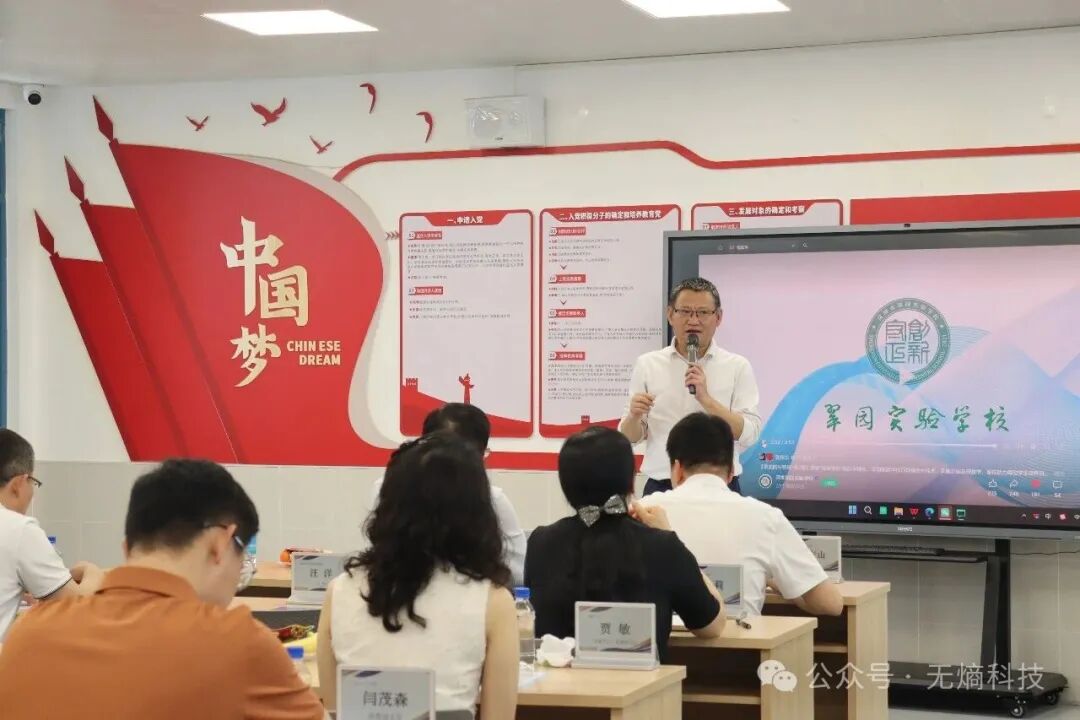 (李远岱校长致辞)
视力保护:使用墨水屏的班级学生视力未下降,反而优于未使用墨水屏的对比班级。电子纸的类纸显示、无蓝光特性,从根源上降低了学生视觉疲劳;
成绩提升:学生薄弱学科成绩显著改善,个性化学习路径让每个孩子都能“精准补短板”。
四大教学痛点破解
-
青春期学生“沉默课堂”:课堂互动功能让每个学生都能匿名或实名参与,不再有人被忽视;
-
错题收集“手工时代”:系统自动记录错题,形成个人专属错题库;
-
作业反馈“滞后难题”:AI自动批改实现“秒级反馈”,学习闭环即时完成;
-
个性化练习“一刀切”:基于错题数据推荐“举一反三”精准练习,真正实现因材施教。
“我们专门制作了宣传视频,因为这些改变是看得见、摸得着的。”李校长的分享赢得了全场嘉宾的共鸣。
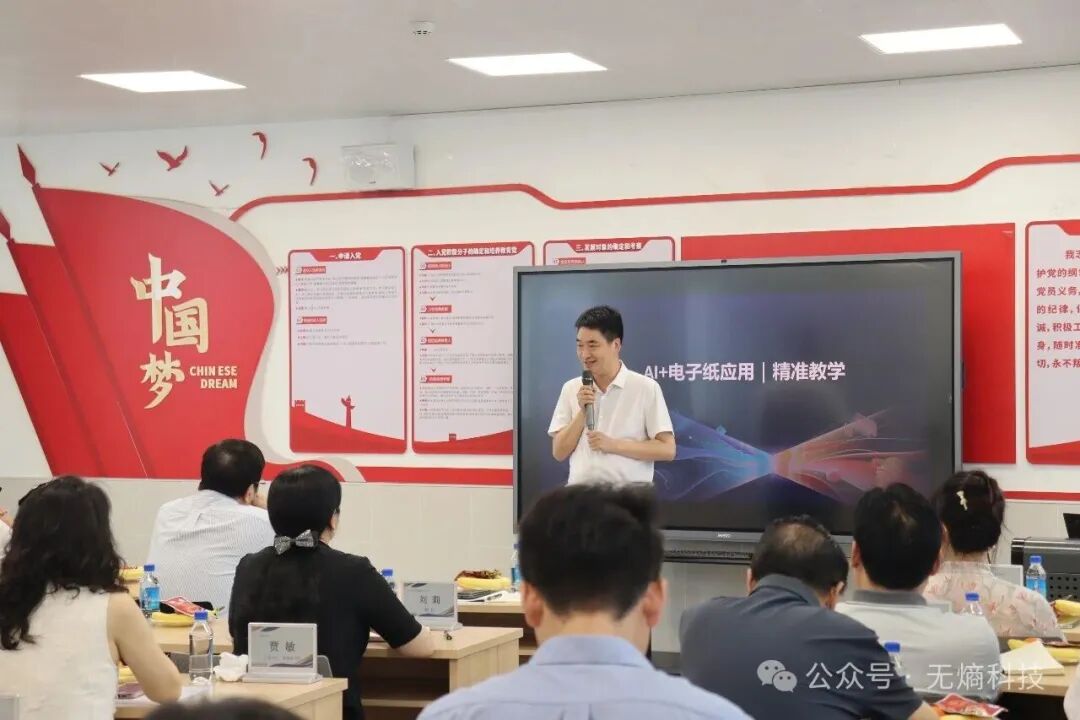
三、专家视角:“慢教育”在AI时代的新内涵
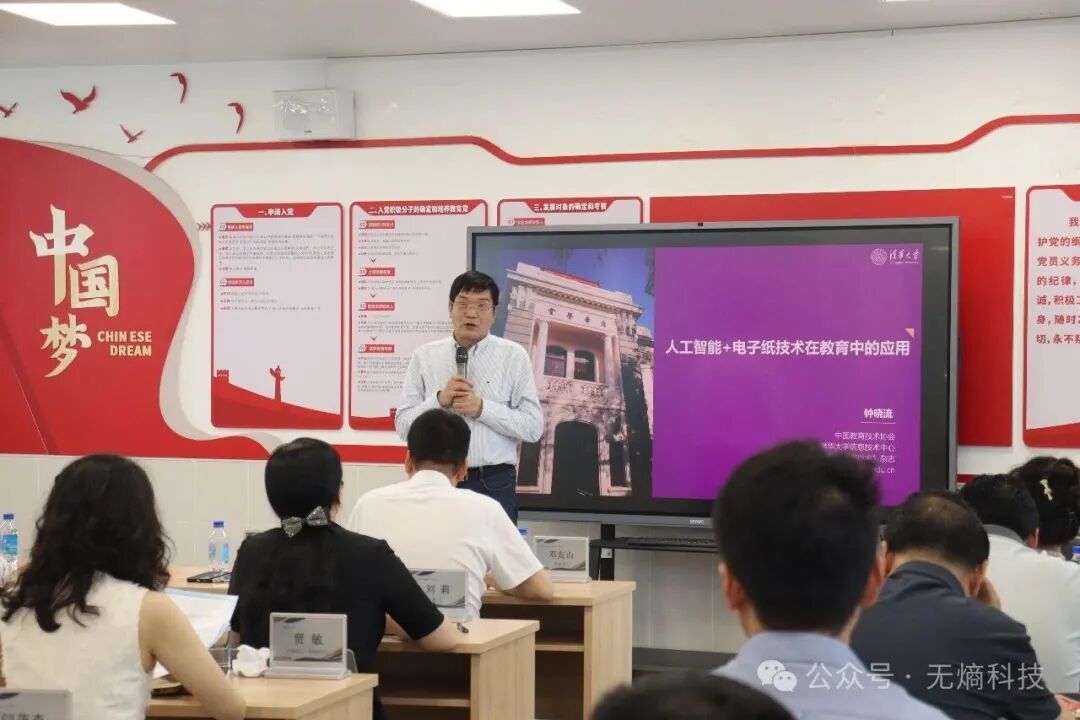
钟晓流副会长:AI不是让教育更快,而是更精准、更有温度
中国教育技术协会副会长钟晓流以《人工智能+电子纸技术在教育中的应用》为题发表主旨演讲,提出了引人深思的观点:

-
精准教学:AI快速识别学习瓶颈,教师精力聚焦于关键问题;
-
深度学习:告别题海战术,通过数据驱动实现知识深度掌握;
-
温度教育:技术全面理解学生的学习过程、心理状态与发展潜力。
发出倡议:邀请更多学校参与标准研制与实践试点
钟副会长正式介绍了中国教育技术协会重点课题——《电子纸智能学习终端标准研制与人工智能辅助教学实践应用试点》,并向全国学校发出邀请:
-
课题将在作业分配、自动化批改、学情诊断等环节形成可推广、可复制的技术标准;
-
试点学校将获得“试点应用校”“示范校”挂牌,教师可获“优秀教师”认证;
-
所有试点学校的实践数据将成为行业标准制定的核心依据。
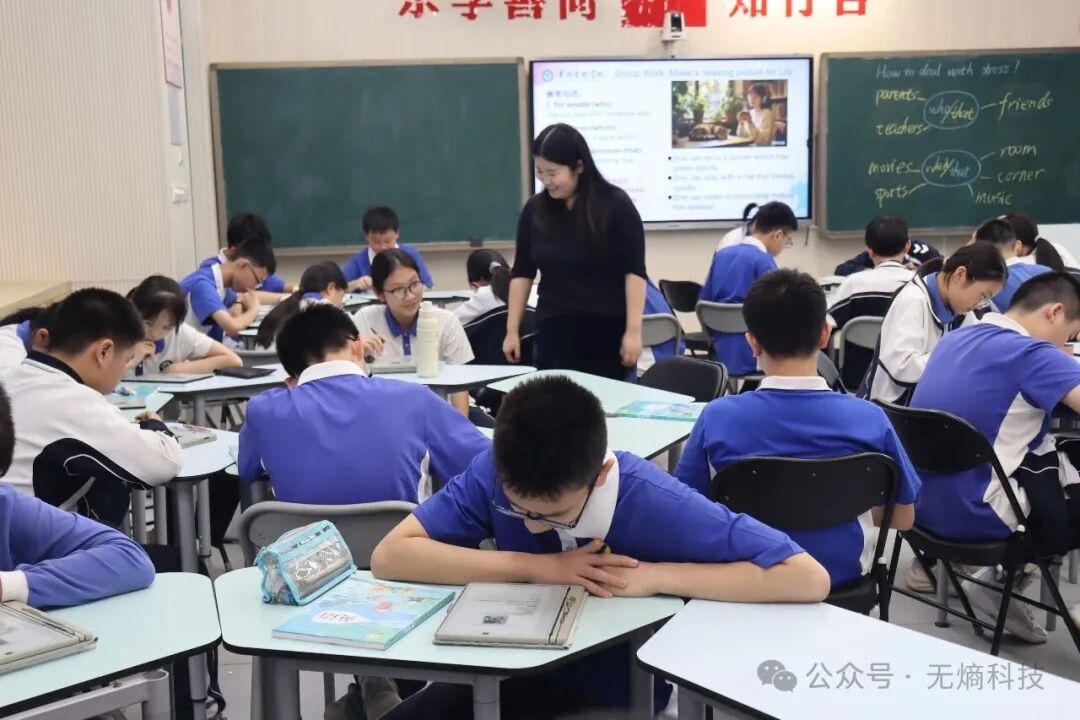
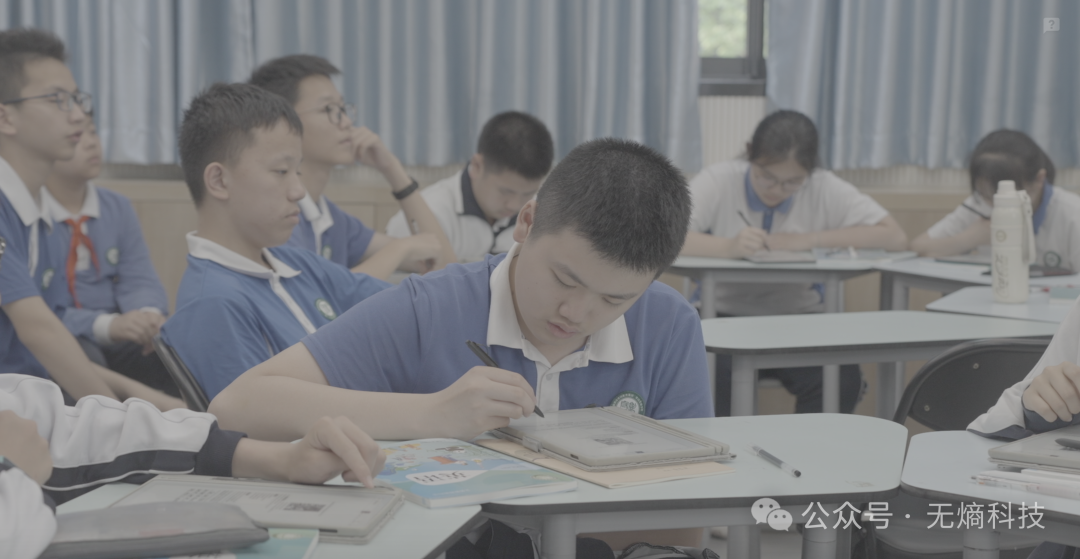
四、课堂实录:当英语课遇上墨水屏,学习如何发生?
五、AI新功能发布:从“精准教学”到“精准育人”的升级
-
智能体平台
教师可自定义AI助教,自动完成作业批改、答疑、学习提醒;
-
跨学科出题
AI自动生成跨学科融合题目,培养学生综合思维;
-
作文辅助教学
行墨作文精批精改+AI太炎文言文训练,双维度提升语文能力;
-
AI口语训练
实时语音评测、情景对话练习,突破口语学习瓶颈;
-
AI数学探究实验
抽象概念可视化、可交互,让学生“做数学”而非“背数学”;
-
北师大心理互动空间
-
内置专业心理测评与课程,实现“育心”与“育智”结合。
“这不仅是功能的叠加,更是从‘精准教学’向‘精准育人’的系统升级。”无熵数字智能教育事业部总监表示。

- 电子纸是中学生学习终端的最优选择
——护眼、类纸特性完美适配青少年学习需求; - AI+电子纸可实现真正的精准教学
——数据驱动让个性化教育从理念变为现实; - 常态化应用已具备成熟条件
——翠园实验学校的实践证明技术与教学可深度融合; - 行业标准制定迫在眉睫
——需要更多学校参与试点,用实践数据为标准研制提供支撑。
正如钟晓流副会长所言:“教育数字化不是技术的竞赛,而是对教育本质的回归。”从深圳翠园实验学校的一间教室出发,AI+电子纸的精准教学范式,正逐渐走向全国,为每个孩子创造更美好的学习体验。
On March 30, Shenzhen Cuiyuan Experimental School welcomed an educational dialogue across a thousand miles—nearly 30 renowned principals, education experts, and industry association leaders from Sichuan and Guangdong gathered together to discuss how "AI + e-paper technology can truly empower precision teaching." From theory to practice, from classroom to campus, this closed-door forum used real data and vivid cases to provide a replicable "Cuiyuan model" for the digital transformation of education.
I. Distinguished Guests Gathered to Discuss the Future of Education
(This forum brought together forces from education, technology, and industry, truly realizing the deep integration of "government, industry, academia, research, and application")
Association leaders and experts: Zhong Xiaoliu, Vice President of the China Educational Technology Association; Yan Yongchang, Director of the Association's Education Committee
Representatives from prestigious Sichuan schools: Deng Youshan, Party Secretary of Sichuan Science City No. 1 Middle School; Li Bin, Principal of Sichuan Yingshan Middle School; Jia Min, Discipline Inspection Secretary of Mianyang No. 1 Middle School; Chen Wei, Principal of Mianyang Minzu Junior Middle School; Du Wenzhi, Party Secretary of Guangyuan 821 Middle School, etc.
Representatives from prestigious Guangdong schools: Li Yuandai, Principal of Shenzhen Cuiyuan Experimental School; Feng Lan, Party Branch Secretary/Principal of Futian Foreign Language School; Chen Shaofen, Party Branch Secretary of Hongling Experimental School, etc.
Industry and research partners: Gang Nan, President of Wushang Digital Intelligence; Chen Lei, AI Lab of Beijing Normal University; Zuo Qiang, Secretary-General of the E-Paper Industry Alliance, etc.
II. Principals Tell Firsthand: How Ink Screens Changed a School's Teaching Ecosystem
(Principal Li Yuandai's address)
Principal Li Yuandai (Shenzhen Cuiyuan Experimental School): Validate with data, speak with results
"The two core indicators we care most about—eyesight and academic performance—both yielded surprising answers." Principal Li shared the results of Cuiyuan Experimental School's two-year practice:
Vision protection: Students in classes using ink screens showed no decline in eyesight and actually outperformed the comparison classes that did not use ink screens. The e-paper's paper-like display and blue-light-free characteristics reduce visual fatigue at the source;
Academic improvement: Students' performance in weak subjects improved significantly, and personalized learning paths allow every child to "precisely fill their gaps."
Four major teaching pain points solved
The "silent classroom" of adolescent students: classroom interaction features allow every student to participate anonymously or by name, so no one is ignored;
The "manual era" of mistake collection: the system automatically records mistakes to form a personal mistake bank;
The "lag problem" of homework feedback: AI automatic grading enables "instant feedback," and the learning loop is completed immediately;
The "one-size-fits-all" of personalized practice: based on mistake data, it recommends "drawing inferences" precision exercises, truly implementing individualized instruction.
"We made a promotional video specifically because these changes are visible and tangible." Principal Li's sharing resonated with all guests.
Secretary Deng Youshan (Sichuan Science City No. 1 Middle School): Cross-regional learning, looking forward to joint growth
As a representative of prestigious Sichuan schools, Secretary Deng highly praised the forum's organization and outcomes: "Shenzhen's practice provides a model we can learn from. We look forward to working with Cuiyuan Experimental School and industry partners in the future to promote coordinated digital education development between Sichuan and Guangdong."
III. Expert Perspective: The New Meaning of "Slow Education" in the AI Era
Vice President Zhong Xiaoliu: AI does not make education faster—it makes it more precise and more human
Zhong Xiaoliu, Vice President of the China Educational Technology Association, delivered a keynote speech titled "The Application of AI + E-Paper Technology in Education," raising a thought-provoking point:
"'Slow education' is not a regression in efficiency, but a rational return in the AI era—letting technology serve human development and letting every child grow at their own pace."
Vice President Zhong emphasized that e-paper smart learning terminals, with their eye protection, paper-like display, and long battery life, are ideal choices for middle school students' learning terminals. Their core value lies in:
Precision teaching: AI quickly identifies learning bottlenecks, allowing teachers to focus on key issues;
Deep learning: moving away from question-stuffing tactics and achieving deep mastery of knowledge through data-driven approaches;
Warm education: technology fully understands students' learning processes, psychological states, and development potential.
Call to action: inviting more schools to participate in standard development and pilot practice
Vice President Zhong officially introduced the China Educational Technology Association's key research project—"Standard Development for E-Paper Smart Learning Terminals and Pilot Practice of AI-Assisted Instruction"—and extended an invitation to schools nationwide:
The project will form promotable and replicable technical standards for homework assignment, automated grading, and learning situation diagnosis;
Pilot schools will receive plaques for "Pilot Application School" or "Demonstration School," and teachers can earn "Outstanding Teacher" certification;
Practice data from all pilot schools will become the core basis for industry standard development.
IV. Classroom Live: When an English Class Meets Ink Screens, How Does Learning Happen?
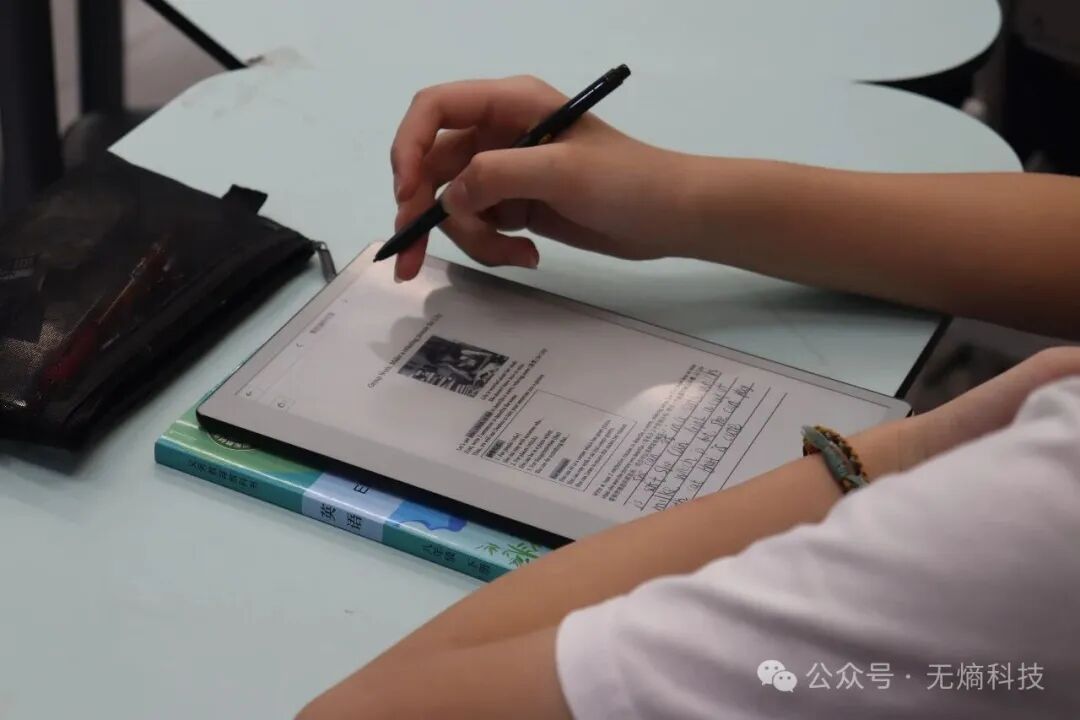
Forum guests entered the smart classroom of Cuiyuan Experimental School and observed an English open class based on the ink-screen precision teaching all-in-one machine—"How to deal with stress?"
1. Student side: Each student's ink screen displays reading materials and interactive questions in real time; a fingertip touch submits answers;
2. Teacher side: The large screen displays real-time class-wide learning data—who has mastered the knowledge point and who still has confusion is clear at a glance;
3. Interactive loop: The system automatically records each student's answer trajectory, and the teacher flexibly adjusts teaching strategies based on real-time learning conditions, truly achieving "teaching guided by learning."
"This is no longer a teacher's one-way lecture classroom, but a data-driven, fully participatory, precisely feedbacked learning community," one visiting principal remarked.
V. AI New Feature Launch: Upgrade from "Precision Teaching" to "Precision Nurturing"
In the final session of the forum, Wushang Digital Intelligence officially released a matrix of six new AI features for the ink-screen precision teaching all-in-one machine, supported by data from Cuiyuan Experimental School:
Core data
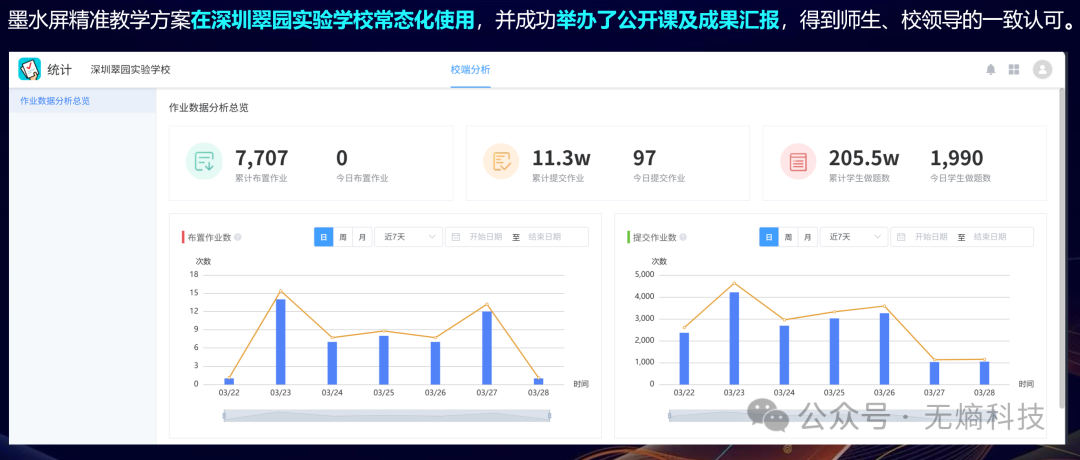
7,707 precision assignments assigned, 113,000 student submissions and feedbacks, and 2.055 million learning data collections prove the product has achieved normalized application.
New AI features
Intelligent agent platform
Teachers can customize AI teaching assistants to automatically complete grading, Q&A, and learning reminders;
Cross-disciplinary question generation
AI automatically generates interdisciplinary questions to cultivate students' comprehensive thinking;
Composition-assisted teaching
Xingmo Composition precise grading and polishing + AI Taiyan classical Chinese training, dual-dimensional improvement of Chinese language ability;
AI oral training
Real-time speech evaluation and situational dialogue practice to break through oral learning bottlenecks;
AI mathematics inquiry experiments
Abstract concepts visualized and interactive, allowing students to "do mathematics" rather than "memorize mathematics";
BNU psychological interactive space
Built-in professional psychological assessments and courses, integrating "nurturing the heart" with "nurturing the intellect."
"This is not just an addition of features, but a systematic upgrade from 'precision teaching' to 'precision nurturing,'" said the director of the Education Business Division of Wushang Digital Intelligence.
VI. Consensus and Outlook: Starting from Shenzhen, Heading to the Whole Country
The forum reached four major consensuses:
—Eye protection and paper-like characteristics perfectly match adolescents' learning needs;
—Data-driven approaches turn personalized education from concept into reality;
—The practice of Cuiyuan Experimental School proves that technology and teaching can be deeply integrated;
—More schools need to participate in pilots, using practical data to support standard development.
As Vice President Zhong Xiaoliu said: "Digitalization of education is not a race of technology, but a return to the essence of education." Starting from a single classroom at Shenzhen Cuiyuan Experimental School, the precision teaching paradigm of AI + e-paper is gradually spreading across the country, creating better learning experiences for every child.